Popular
-
 test fan
Price on Request
test fan
Price on Request
-
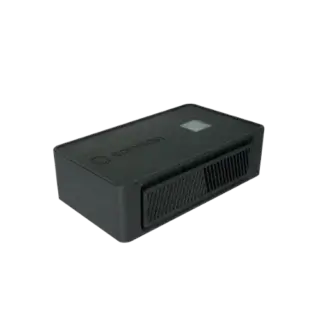 Avalon Nano 3 (4 TH/s)
310€
Avalon Nano 3 (4 TH/s)
310€
-
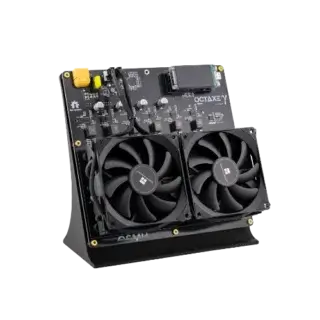 NerdMiner NerdOCTAxe Rev 3.1 (12 TH/s)
480€
NerdMiner NerdOCTAxe Rev 3.1 (12 TH/s)
480€
-
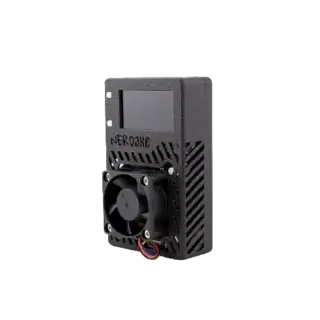 NerdMiner Nerdaxe Ultra (0,5 TH/s)
125€
NerdMiner Nerdaxe Ultra (0,5 TH/s)
125€
-
 Bitaxe Gamma 601 (1,2 TH/s)
199€
Bitaxe Gamma 601 (1,2 TH/s)
199€
Product Showcase


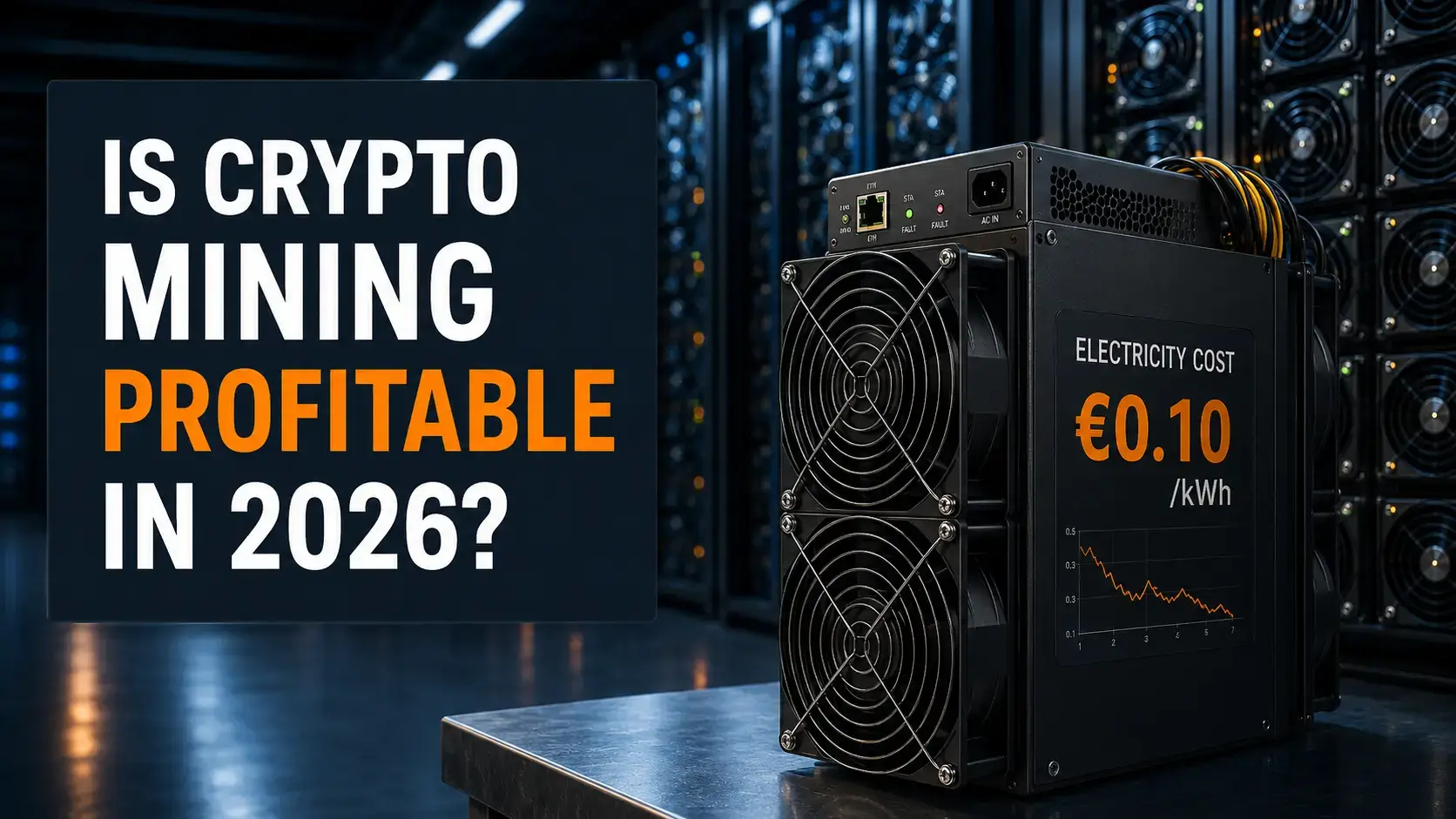
Bitcoin has slipped to around €59,000 (~$64,000), down from roughly €80,000 in March. Network difficulty sits near record highs even though hashrate has fallen about 22% from its peak — miners are switching machines off because the math stopped working. So is crypto mining profitable in 2026? Most articles answer this for Bitcoin alone and conclude “only at industrial power rates.” That’s true, but it’s half the story. The honest answer is sharper: crypto mining is still profitable in 2026 — just not the coin most people assume, and not at the electricity price most people assume. This guide gives you the real European numbers, including the one figure that actually decides it: your break-even electricity price.
What “profitable” actually means (three things people confuse)
Before any numbers, separate three ideas that get mixed together:
- Cash-flow profit — daily mining revenue minus daily electricity cost. This can be positive while you still lose money overall.
- ROI / payback — how long the machine takes to earn back its purchase price. At today’s prices this runs 2–4 years for most machines, and the clock competes with obsolescence.
- Total return vs. just buying the coin — the question nobody likes: would you have done better simply buying Bitcoin or Zcash with the same money?
A miner can be cash-flow positive and still be a worse decision than buying the coin outright. Keep all three in view as we go.
The Bitcoin reality: why mining BTC at home loses money in Europe
Let’s be blunt about the coin everyone asks about. With Bitcoin near €59,000 and difficulty near all-time highs, the cost to produce one BTC for public miners now sits around $38,000–$45,000 — and that’s with industrial power and the newest hardware. A home miner in Europe pays far more than that per coin. The April 2024 halving cut the block reward to 3.125 BTC, and rising difficulty keeps eroding what each terahash earns.
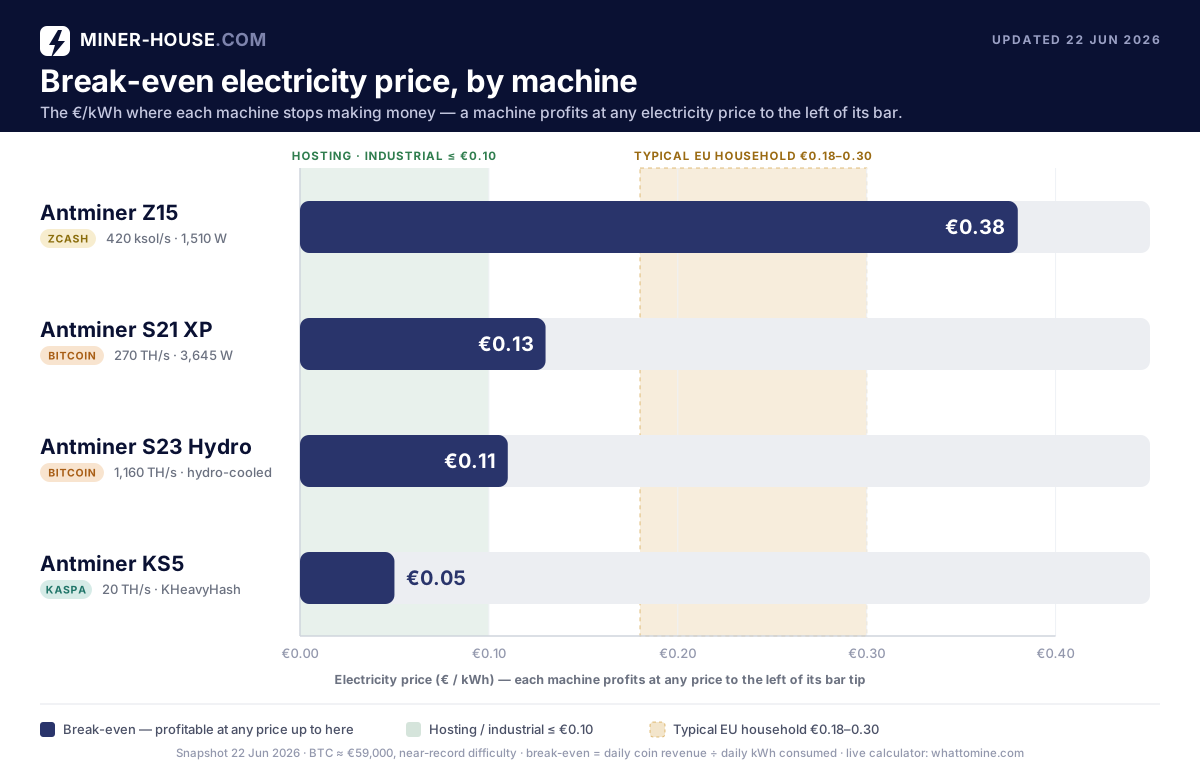
For an efficient air-cooled flagship like the Antminer S21 XP (270 TH/s, 3,645 W), break-even lands near €0.13/kWh at the current Bitcoin price. Below that you profit; above it you bleed. Since typical EU household electricity runs €0.18–€0.30/kWh, the conclusion writes itself: mining Bitcoin in your home in Europe loses money today. It only works at hosted or industrial rates, ideally under €0.10/kWh.
The part nobody says out loud: crypto mining isn’t only Bitcoin
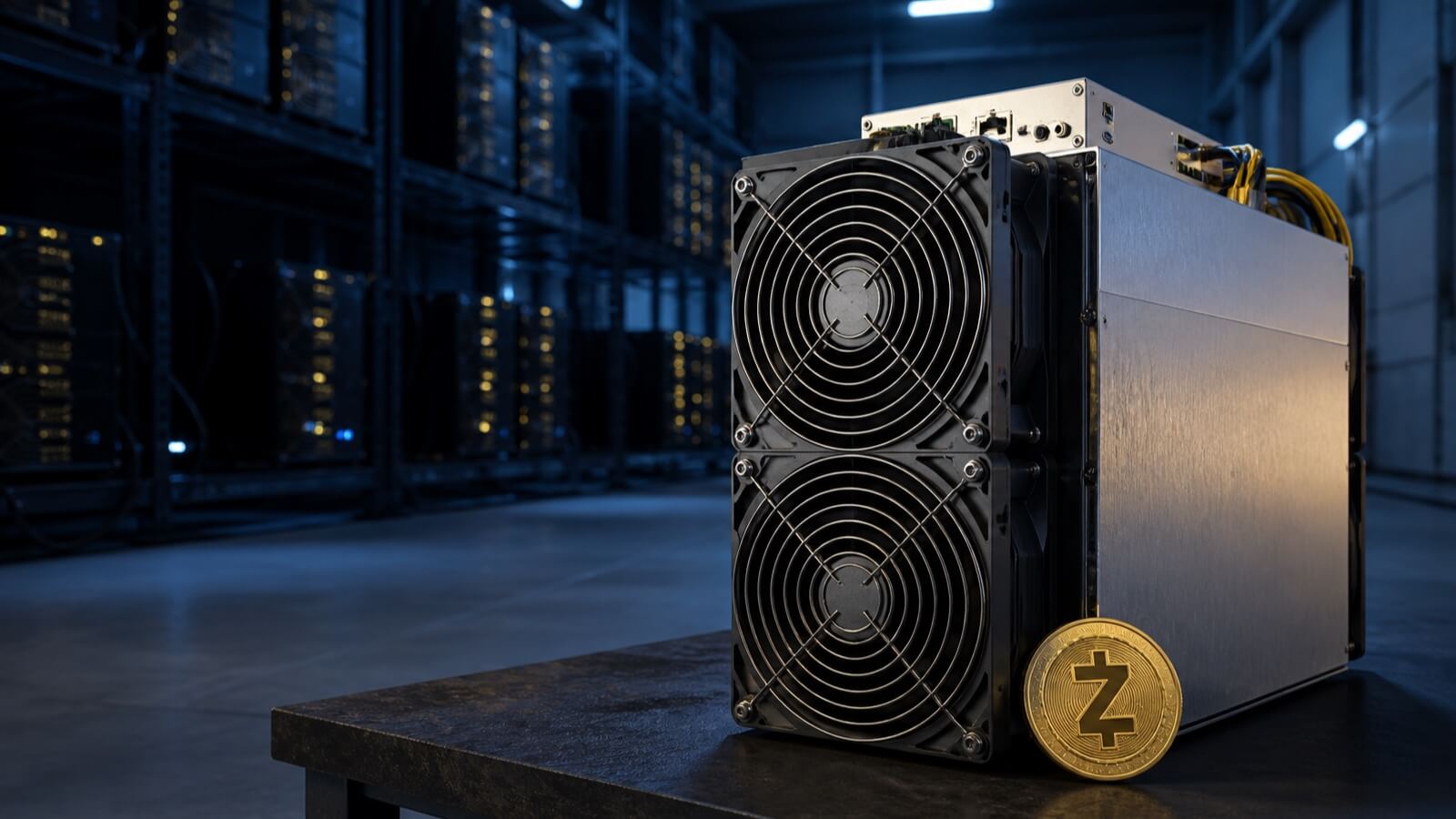
Here’s the gap in almost every “is crypto mining profitable” article — they treat mining and Bitcoin as the same thing. They aren’t. Different coins use different algorithms and different machines, and right now the profitable machine in 2026 isn’t a Bitcoin miner at all. It’s a Zcash miner. The Antminer Z15 draws just 1,510 W while Zcash trades strong, which pushes its break-even electricity price far above what any household pays.
The one number that decides it: break-even electricity price
Forget headline hashrate. The figure that determines whether crypto mining is profitable for you is the electricity price at which a machine stops making money. Below break-even you profit; above it you lose. Here are four representative machines at the current (22 June 2026) coin prices and difficulty:
| Machine | Coin | Break-even price | At EU household rate (€0.25/kWh) |
|---|---|---|---|
| Antminer S21 XP / Hydro | Bitcoin | ≈ €0.13/kWh | Loss |
| Antminer S23 Hydro | Bitcoin | ≈ €0.11/kWh | Loss |
| Antminer Z15 | Zcash | ≈ €0.38/kWh | Profit |
| Antminer KS5 | Kaspa | ≈ €0.05/kWh | Loss |
Read the table slowly, because it is the whole article in one frame. Only the Zcash machine breaks even above a typical European household tariff. Every Bitcoin machine — even the ultra-efficient S23 Hydro — needs cheaper power than a home contract provides. And Kaspa, despite cheap hardware, has the lowest break-even of all: it mines at a loss at almost any European rate right now, because the coin price is depressed. That low hardware price isn’t a bargain — it’s the market pricing in weak economics.
Real economics: payback, and why it’s longer than the brochures say
Cash-flow is only half of “profitable.” The other half is payback — and this is where honesty matters. Even a cash-flow-positive Zcash machine takes its time to repay its purchase price at today’s numbers. A useful rule: payback period (days) = machine price ÷ daily net profit. At current Zcash economics that lands a Z15 in the multi-year range, and two forces work against you the whole time:
- Difficulty rises. When a coin is profitable, more machines come online, difficulty climbs, and your daily earnings shrink — so real payback is longer than a flat-line calculation suggests. Our halving and difficulty explainer covers why this is structural.
- Hardware depreciates. Each new generation (S21 → S23) cuts the resale value of older machines. You’re racing the clock to repay before the hardware ages out.
This is why we tell European buyers to model payback at half of today’s revenue. If the machine still makes sense at half, it’s a real investment. If it only works at today’s peak numbers, it’s a bet on the coin price — which is a different thing.
Mining vs. just buying the coin
The fair comparison nobody runs: with the same money, you could simply buy Bitcoin or Zcash and hold. Mining adds hardware cost, electricity, noise, heat, maintenance and difficulty risk. Mining wins when you have genuinely cheap power (or hosting) and you want to accumulate a coin below market cost while the hardware pays for itself. Buying wins when your electricity is expensive and you just want price exposure without the moving parts. Neither is “right” — but if your home tariff is €0.20+/kWh and you’d be mining Bitcoin, buying the coin is almost always the better math.
How hosting changes the answer
Everything above is why most of our European customers don’t mine at home. In a hosting datacentre, machines run at industrial electricity rates with cooling and noise handled — the saving can reach thousands of euros per machine over its life. At hosted rates near €0.07–€0.10/kWh, the Bitcoin machines that lose money at home move back above break-even, and the Zcash machine’s margin widens further. If your home electricity is above ~€0.15/kWh, hosting isn’t an upsell — it’s often the only configuration where mining is profitable at all.

So, who is crypto mining actually profitable for in 2026?
It’s profitable for you if:
- You have electricity under ~€0.13/kWh, your own solar, or you use hosting.
- You pick the machine by break-even price, not headline hashrate — and you’ve checked today’s numbers on a live calculator.
- You treat it as a 2–3 year position and you’ve modelled rising difficulty.
- You want to accumulate a specific coin (Zcash today) below market cost.
It’s not profitable for you if:
- You pay €0.18+/kWh at home and want to mine Bitcoin in a spare room.
- You expect guaranteed monthly income — mining cash-flow swings with price and difficulty.
- You’d do it with money you can’t afford to have tied up, or drawn down, for a couple of years.
FAQ: is crypto mining profitable in 2026?
Is crypto mining profitable in 2026?
Is Bitcoin mining profitable in 2026?
Which cryptocurrency is most profitable to mine right now?
What is a good electricity price for mining?
How long is the payback period on a miner in 2026?
Is it better to mine crypto or just buy it?
Find out if mining is profitable at YOUR electricity price
We’ve sold ASIC miners across Europe since 2015 and we’ll tell you honestly when the numbers don’t work for your setup. Compare machines on our profitability comparison, see which one fits in our 2026 buyer’s guide, or run any machine at industrial rates in our hosting datacentre. Browse current miners and prices or message us for a free break-even calculation on your tariff.
Disclaimer: We are not financial advisors. Mining profitability changes daily with coin prices and network difficulty; every figure above is a snapshot for 22 June 2026 and not a guarantee of future returns. Do your own research and never invest money you cannot afford to lose.