Category
Popular
Product Showcase


How to Choose the Right Miner for Mining?
Which mining miner to buy is a common question. But how to choose the right one? (A guide for beginners)
- Which miners are worth considering?
- And which ones NOT to buy? (and why?)
See ↓: Statement on the Current Offer of Miners [REPORT]
Statement from: 13.10.2025
But first: A timeless guide ↓ that has always been valid (and always will be).
Miner Selection - Tailored for You - By Phone
A selection tailored for you based on 4 factors: Where you want to mine (related to electricity price, noise, and heat), which coins you prefer, how much money you have for a miner, and your risk tolerance.
(*A different miner is worthwhile for every budget, and a completely different miner is worthwhile for every electricity price...)
By phone – fill in your phone number and one of our colleagues will contact you as soon as possible (within 1-3 days).
Call us directly:
+421 949 691 788
+420 704 736 656
↓ Timeless Guide ↓
You always choose based on 2 Main Factors:
#1 Machine PROFITS:
- Go to the Profit (ROI) Calculator.
- Enter your Electricity Price (a different miner is worthwhile for every electricity price!).
- Important to know: The (currently) most profitable machine may not be the best one (for the future)!
Because you also have to look at how much the machine will mine in a week, a year, two years... And that is related to ↓
#2 QUALITY / size / stability of the coin you are mining:
- 2a) Small coins = risk of price fluctuation, difficulty... the machine might mine €30/day today, but in a year it could be €60 or even €10/day (if the coin's price drops/rises significantly).
- 2b) Largest mining coins = BTC and LTC – long-term, historically stable, high-quality.
↓ Current Statement on the Current Offer of Machines ↓
Which (specific) machines should you buy now?
There have always been (and probably always will be) only 3 categories of mining coins.
#1 BTC machines = a category of its own. The king of kings.
Although they offer stable yields (because BTC is a stable, large coin), they have virtually no profits (or even a loss) – historically, they have always been, are, and probably will be the least profitable machines on the market. They are only profitable if you have free electricity (or very cheap – up to approx. €0.04/kW).
Currently, even BTC machines show fairly good profits (25-30 month ROI), but that's because BTC is quite high ($100k+). When the bear market comes (1-year crypto decline), BTC profits will not even be at zero (€10/day mined and you also pay €10 for electricity).
#2 ETC, CKB, ALPH, KAS, HNS, SIA, etc. = most are small coins.
This means a high risk of large price fluctuations (the coin can grow extremely, then fall extremely). Also, a risk of a larger increase in difficulty (especially at the beginning). Usually also small mining profits. There are periods when the price of such a coin shoots up, and so do the mining profits, but then they can fall just as quickly (simply a small coin – high risk). Or – the second case – when a new smaller coin like this is created, the mining profits are huge at the beginning – like currently:
- #2+ XTM (Tari) – a small coin, currently with huge profits. But it's a risk (detailed statement below).
- #2++ ALEO – also a small coin, with large profits. But it's a risk (detailed statement below).
#3 LTC = the third category – although also an Altcoin, it is a huge, large, and stable Altcoin.
- Long-term, historically the most stable, most durable machines on the market (along with BTC machines).
- And for us, the best-selling machines for the last 5 years (always either TOP1 or TOP2 best-selling machines are LTC machines).
- LTC was created in 2011, with a huge history; Bitcoin's little brother. (So not a small coin that was created half a year ago).
- Mining stability (i.e., price and difficulty stability) is as high as on BTC machines – but LTC mining profits are higher than on BTC machines.
- LTC machines have been popular and profitable for a long time. There were periods when LTC profits were extremely high, periods when they mined less, but then they grew again... but simply throughout history, LTC machines have been interesting miners. Both 1, 2, 3, 4, 5, 6 years ago... LTC machines are simply for years and years of mining.
- And new models for LTC have so far been released with 3-year intervals: L3 (2017); L7 (2021); L9 (2024) – a huge advantage (that a new, more powerful machine is not created every year).
- Stable coin, you know it probably won't drop by 50% in a day, so it also mines stably. Slightly lower profits, but simply stable mining for many years.
- PS: You can mine LTC, but have BTC sent directly to your wallet.
*Detailed breakdown of LTC and LTC mining – see bottom of the page.
Is the Market Too High to Buy Machines?
We are already in an advanced phase of the 4-year cycle. But distinguish between BTC and Altcoins.
BTC is at ATH (all-time highs), although it likely still has some growth ahead of it.
However: Most Altcoins are practically at the bottom. See the charts... see where Altcoin prices were at their peak in 2021 and where they are only now.
After Trump's victory in the fall, the whole market grew, including Altcoins. But in the spring of 2025, after the start of trade wars, everything nicely fell again and Altcoin prices are where they were last year before that whole rally. Which is great, because otherwise, the machines would already be expensive.
For example, the L9 16G in August 2024 (when the L9 machine was announced) cost about €8,000. In January 2025, the L9 cost about €16,000 (Trump's victory, so cryptocurrencies soared). Subsequently, now in August 2025, the L9 cost about €8,000 again (thanks to Trump's trade wars and tariffs, which lowered crypto prices).
Separate Statements on (Currently High-Profit) Small Coins
#2+ Separate XTM (MinoTari – Tari) Statement
XTM = a young coin. It started trading on exchanges around 05/2025. The first ASIC miner (Goldshell XT BOX 580G) was announced at the end of 09/2025. The first batch will be released to the market by the manufacturer at the end of 10/2025 (so clients worldwide will receive the machines at the end of 10/2025, or early 11/2025). XTM is currently mined only on GPU cards.
The Risk: Within a month, the difficulty (mining difficulty) could easily be 3x higher. This means the machine could mine 3x fewer coins per day than it would today.
The Price: A small coin, so it can fly up/down. In our opinion – we are entering the Altcoin season, so Altcoin prices should rise significantly this fall, which XTM Tari could ride on.
#2++ Separate ALEO Statement (in short)
The ALEO coin started at the beginning of the year (01/2025) with huge profits. The yield held up quite well for the first month (difficulty did not grow strongly). Since summer, the difficulty began to grow a bit more, but still at a relatively moderate pace. Since 08/2025, Aleo has switched to a combined mining method (PoW+PoS) – if you want to mine with an ASIC miner, you must also hold a certain number of coins (which you cannot sell) – nothing terrible, but it's a condition.
Conclusion: A typical small coin for which new ASIC miners have been created. Huge profits, but yields are gradually slowly decreasing – exactly as is typical for small coins (difficulty for small coins can increase X-fold within 1 year – which won't happen with large coins like BTC, LTC...). People who bought ALEO machines x-months ago = a very solid result for them, in our opinion. The difficulty could have increased much more.
Full Statement on ALEO Coin (with Monthly Updates)
ALEO:
A small coin, huge profits (ROI approx. 5-8 months). Will those profits drop? What is the truth?
ALEO Price – see April – the price of ALEO dropped by 50%. But within the next 2 weeks, it grew even higher than it was originally. This is exactly how smaller coins can move. Bigger fluctuations down / then up...
Although – the -50% drop was, in our opinion, caused by Trump's games with tariffs. BTC dropped by about 10%, Aleo dropped by 50%. But we expect the same when Trump finishes his games, achieves his goal, interest rates are lowered, and the markets continue to grow. BTC will grow by, say, 10%, but the ALEO coin could easily grow by +50%. Simply a smaller coin, X-times bigger fluctuations than with BTC. And that's both downwards and then upwards.
Furthermore:
If the price of ALEO had grown 10x in recent weeks and that's why there are such huge profits now, that would be the worse variant. But ALEO is in the exact opposite situation. ALEO has dropped in recent months from about $7 to about $0.2 (and the mining profits are still huge). So if the price of the ALEO coin gets back to just half of where it was, the profits would be x-times higher than today (astronomical).
But it's still true, it's a smaller coin = bigger risk...:
- Difficulty is and will definitely go up (the machine will gradually mine fewer coins).
- But we also expect the price of the coin to go up, because: It will be mined more, thus it will be traded more (liquidity). We are in a bull run (rising trend). In a bull run, markets don't fall, they grow. And rapidly.
- Potential also from the perspective of where the coin's price was a year ago and where it is now.
- Risk that a newer machine with higher efficiency will be created, then another machine, etc. (with new coins, even 3 new models can be created in the first year of mining). With large (older) coins, a new miner model is usually created once every 1-3 years. So far, only the first batch of machines is on the market (even the 300M machine is not a new version – it's just a combination of 5 small Aleo AE0 60M machines together (the 300M machine has exactly 5x higher performance and 5x higher consumption – so no improvement in efficiency)).
Therefore, in half a year, the machine could mine 5x more or 2x less than today.
UPDATE end of 04/2025:
Honestly: we expected the difficulty to be much higher by now (end of 04/2025) (meaning the machine would mine far fewer coins). The number of coins is slowly decreasing, but we expected it to be 5x worse.
UPDATE 1.5.2025:
As of yesterday, the difficulty has started to increase more (as the 230M machines have entered the market). We expect the next major jump in difficulty when the 300M machines start to connect (around mid-May).
UPDATE 17.5.2025:
ALEO 300M machines are just entering the market these days, so people will be connecting them, and the difficulty will definitely start to rise. Therefore, machine prices should start to fall (if the price of ALEO doesn't shoot up) – so we recommend waiting at least 2 weeks before buying a machine.
UPDATE 26.6.2025:
Machine prices have dropped, ALEO has been holding around $0.20 for a while. (The whole market has been more or less stagnant for a few weeks – we are waiting for a proper Altcoin rally to finally start and prices to rise significantly). The manufacturer announced a "new" Aleo 600M machine. However, again, it's not a novelty – effectively 2x ALEO 300M (500W) together (as this ALEO 600M has simply 2x the performance and 2x the consumption (1000W)). So again, no improvement (which is great news for us miners). Difficulty is slowly rising, but profits are still beautiful.
UPDATE 14.7.2025:
Aleo profits and difficulty are relatively stable (good news). Instead of the Aleo 600M, there will be a 720M version – again, no improvement in efficiency – in fact, the opposite. Since the machine has 720M and 1300W (i.e., +20% performance but consumption up to +30%), but the price is a bit better. So the manufacturer has still not increased efficiency (which is good news). These 720M machines should enter the market around the end of 07/2025 – when we partially expect an increase in difficulty. However, based on sales, we see that not large quantities of these machines are being sold, so the difficulty probably won't jump up much.
Update 07/2025:
On 1.8.2025, the Aleo coin switched to a PoW+PoS mining system (a rarity in cryptocurrencies). PoS = a mining system where you don't mine on physical ASIC miners but only virtually (you lock a predetermined number of coins and earn interest for it). In plain English: To be able to mine Aleo, you will have to hold a certain number of coins. It should be 4600 ALEO coins per 1GHs of power (1GHs = 1000MHs). So if you have an Aleo 300M machine, you need to own and hold about 1380 ALEO coins to be able to mine on your machine. At a price of Aleo approx. €0.20, 1380 coins = approx. €276. So nothing terrible, but it's a condition. These can be mined coins. You can also buy the coins normally on an exchange. It doesn't matter. HOWEVER! This also means that from these locked coins, you will earn interest (that's the point of Staking). So you will earn 1. directly from the miner... 2. you will earn through staking. What will this cause in the market? Every miner in the world will have to hold coins (and not sell) = the price of ALEO will tend to grow more = higher mining profits. Details HERE
Update 08/2025:
A vote is currently underway on whether more coins will be needed for mining – a gradual increase in the number of coins every 3 months for the next 8 years (i.e., 8 increases). Detailed info HERE
Update 27.9.2025:
Difficulty is gradually increasing. Not at a dizzying pace, but it is growing, so the machines are gradually mining fewer coins. The price of ALEO is still hovering around $0.20-$0.25.
How to Choose the Right Miner?
Method A)
- Choose a Coin
The larger the coin, the lower the risk (that profits will shift). The largest coins for mining = BTC and LTC. - What is your Electricity Price?
For example, you can go for LTC machines even if you have free electricity or if you pay for it. But a BTC machine only makes a profit with free electricity. (You can find this out in the Profit Calculator). - You've chosen a coin (e.g., LTC), now which LTC model exactly?
It's almost always true that the more powerful the machine, the slightly better the efficiency. For example, the L9 16000M has a slightly better ROI than the older L7 9050M model (logical). Therefore, it's better to buy 1x L9 than 2x L7 machines.
Method B)
*different process, same result.
- Go to the Profit Calculator (must use a PC) and...:
Enter your electricity price – at home or from a data center (if you want to mine in a data center). The calculator will show you the exact current ROI of all machines. - Again, as mentioned in Method A: The larger the coin, the lower the risk. You choose the one with the fastest ROI + that you have money for + that mines the largest possible coins. So if the #1 most profitable machine has a 12-month ROI (but mines a tiny coin) and the #2 most profitable machine has a 14-month ROI (but mines a large coin like LTC), definitely go for the #2 machine (slightly lower profits but much lower risk).
PS: There are no such things as "Beginner Machines" because they are all for beginners. All machines are equally high-end. And they are all equally simple to use, as you don't control, install, or set up anything on the machines (and connection takes 3 minutes). You choose the machine based only on 1. cryptocurrency 2. how much money you have.
Our Statement – Method A)
1st and 2nd step – Which Coin? (based on Electricity Price – below/above €0.05/kWh)
#1. If you have FREE electricity (or up to €0.05/kWh) = BTC miners
BTC = the least risky machines (since you are mining the "sure thing," Bitcoin).
If you were to pay a normal electricity price (€0.10 to €0.15), BTC machines = the least profitable machines on the market (what you mine, you approximately spend on electricity).
However, PARADOXICALLY, if you have free electricity, BTC = one of the most profitable machines (on par with Kaspa machines). And at €0.05/kWh, the profits are still beautiful, hence BTC.
Update after halving: After the BTC halving, the prices of BTC machines have also dropped, making it an ideal time to buy. We are now waiting for the price of BTC to shoot up, and thus the prices of BTC machines to rise...
#2. If you have €0.05/kWh and more
#2a. Which ones ❌ NOT to Buy? (if you have €0.05+)
Machines for: ALPH, ScPrime, ETC / Nervos / HNS / SIA / KDA, etc...
Regardless of the electricity price, this is (in our opinion) much riskier mining than with Kaspa / LTC / BTC for various reasons: either small profits / or okay profits but it's a shitcoin (meaning large price fluctuations) / or low growth potential compared to the mentioned coins / or disproportionately high risk, etc...
Special Statements on ALPH & ScPrime Machines
Special statement on ALPH machines:
Beautiful profits but high risk. ALPH was previously mined on GPU cards; the world's first ASIC miner for the ALPH coin was created in 04/2024 (AL-BOX 360G). We expected the difficulty to gradually increase – which it did. At the end of 07/2024, the manufacturer released the new AL-BOX 2 720G. The difficulty should therefore continue to grow gradually. We expect the largest difficulty growth around the first half of 09/2024, when the Antminer AL1 15.6T machines should hit the market.
INFO from 23.11.2024: The difficulty for ALPH (since 09/2024) has increased approximately 8x (as expected).
Special statement on ScPrime machines (Antminer DR7):
The ScPrime coin was previously mined on GPU cards. Now, the very first ASIC miner in the world for the SCPrime coin has been created. The efficiency of an ASIC miner is always x-times higher than GPU cards -> hence huge profits (currently about 1.5 months ROI) -> hence people are buying it in large quantities -> hence the difficulty will rise rapidly -> hence the yields will drop rapidly.
UPDATE 29.7.2024: Difficulty increased 19.4x in the last 3 weeks (daily yield thus dropped 19.4x).
#2b. Which ones are ✅ WORTH IT? (if you have €0.05+)
Kaspa / Litecoin
At €0.05/kWh and more (i.e., normal electricity price), in our opinion, you should look at LTC or Kaspa miners. Nothing else.
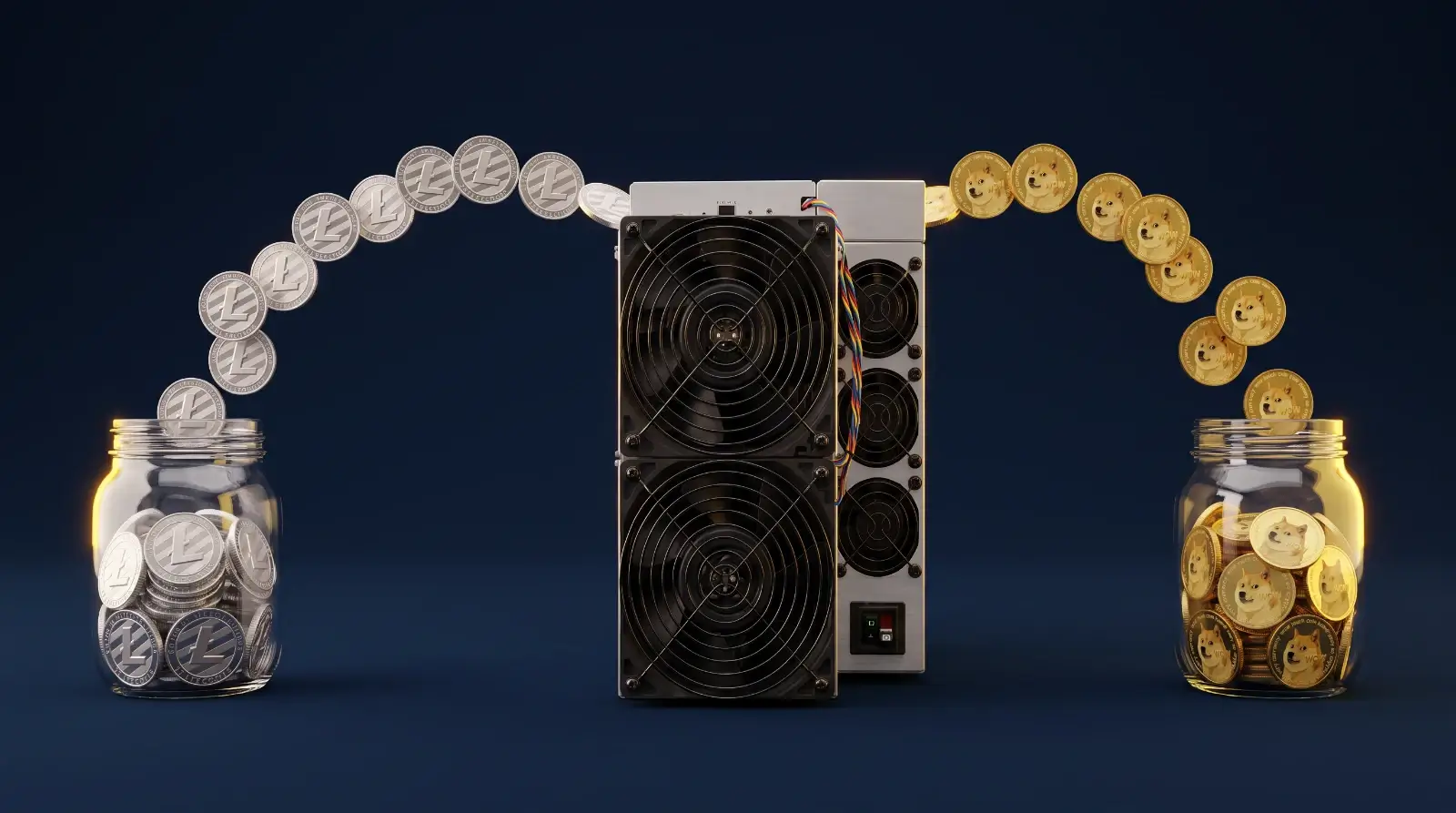
LTC miners (L7, L9)
L7, L9 are our preferred machines (for X-years now) because:
- For us, a very low risk (similar to BTC), as LTC was created from Bitcoin itself (a fork in 2011).
- A quality, stable coin, without large fluctuations, from the era of veterans (coins that have been here for over 10 years), very conservative.
- The 2nd most popular coin for Payments in Stores (usually when you can pay with crypto in a store, it's via BTC and LTC).
- At the same time, decent Mining Profits – not as high as with Kaspa (yet) but very stable profits (without major fluctuations, as LTC doesn't have large fluctuations).
- Simultaneously (in our opinion), a coin where we can predict with a very high probability where the price will be around the end of 2025 (at the market peak).
- We expect about a 5-8x growth for LTC (at least to the previous ATH of €341/LTC; a realistic estimate is €500/LTC). The miner would thus mine an estimated €70-120 daily (in the previous bull run, the L7 made about €150 daily), and thus the price of an L7 miner will be about €17-25,000 (it cost €25,000 in the previous bull run); 2-year-old used L7s will then sell for about €12,000-18,000.
- (We can predict the price of large and stable coins like LTC, BTC, etc., with much higher probability than small coins).
- At the same time, LTC has already undergone its Halving (August 2023) = so peace for the next 3.5 years... ;
- Therefore, for us, L7 = The Best Ratio among all miners on the market (risk vs. current profits vs. probability of expected profits).
- Personally, we have been buying only L7 miners for ourselves for the last year or so!
Update 23.11.2024:
Profits for LTC miners have shot up beautifully, as expected. L7 and L9 are currently the most profitable machines on the market. Yet just a few months ago, LTC machines had an ROI of about 40 months – and when we explained to people that it was only short-term, few bought LTC machines and preferred to buy what was more profitable at the time (albeit with higher risk).
Notice that was posted on the mining calculator: "*L7 - warning: this is currently a very skewed view (45+ months ROI), but it's enough for the LTC price to double, and the net profit won't just double but increase 7x (original yield €12 - €10 electricity = €2 net profit; new yield €24 - €10 electricity = €14 net profit). So the LTC price doubled, but the net profit increased 7x (from €2 to €14 daily) because the electricity cost doesn't change (€10 daily)!! (and thus the ROI from 45m -> 14m.)"
And so it happened. The current ROI for LTC machines is even around 10-11 months. The only negative: With LTC machines, you mine LTC+DOGE, and a large part of the profit currently comes from DOGE mining (L7 and L9 miners). But LTC is also growing steadily – and we are still waiting for the biggest growth.
Update 01/2025: LTC machines are currently the most profitable on the market. At the same time, after 3 years, a new LTC machine (L9) is coming to the market, so we can probably expect the difficulty to grow a bit more than before.
KASPA:
- The most profitable miners produced in the last 4 years (as of 09/2024).
- Also the best-selling machines for the last 7 months (approx. 60% of orders are for Kaspa) – (as of 09/2024).
- But it is a smaller coin (which, on the other hand, gives it huge potential).
- An XY-fold price increase over a few months is a completely common thing in the crypto market for such high-quality small coins.
The Kaspa Coin:
- For us, a brutally high-quality coin (google the technology, developers, goals, what it solves, etc... huge potential).
- Block time: only 1 second (Bitcoin has 10 minutes) = virtually instant transactions.
- Transfer fee under $0.01 (with BTC usually $2 - $10, but sometimes $100+).
- Widely recognized founder (in crypto and scientific spheres); Dr. Yonatan Sompolinsky (scientist) – huge experience with cryptographic technologies – as he was one of the first developers of Bitcoin from the very beginning in 2008 (directly with Satoshi Nakamoto); subsequently, in 2013, he moved to the development team of Ethereum...
- ...but in neither of the cryptocurrencies (BTC and ETH) could he fully realize his innovative ideas. And so, after 12 years of experience with crypto technologies in the 2 largest projects in the world (BTC and ETH), he decided to found his own cryptocurrency: Kaspa.
- Huge growth potential (in terms of volume). Kaspa is already on many exchanges, but not all of them. In crypto, when a new coin is listed on an exchange, new capital flows into the coin within hours, as tens of thousands of new investors can buy the coin overnight, and the price shoots up.
- Probably the most important information – ASIC miners worldwide are produced by only 3 main companies. And each year, these manufacturers produce at most only 1-2 NEW ASIC machines for new cryptocurrencies (for which ASICs did not exist before – they were mined only the old way on GPU cards). The production and development of an ASIC miner is an extremely technologically and financially demanding activity (millions of dollars in development and extremely complex development takes many months). Therefore, manufacturers conduct huge analyses of hundreds of different cryptocurrencies every year to decide which next coin to start developing a new ASIC miner for this year. If it were a low-quality shitcoin that would crash in 3 months, no one would buy the machines, the manufacturer could end production and start counting billion-dollar losses. In other words: When a manufacturer starts producing a new machine for a coin, it is saying that this coin emerged as a clear winner from hundreds of different cryptocurrencies that the manufacturer analyzed.
- We are still only 1/3 of the way through a 3-year bull run, meaning 1.5 years of huge growth ahead of us, when virtually every cryptocurrency should grow again (but the quality coins all the more so).
...Continue Reading about the Kaspa Coin
Step 2 of choosing a machine – Which model exactly?
If, for example, Kaspa, then: KS2 / KS3m? Ibelink 10.5T? Or KS5 21T?
That depends mainly on how much money you have.
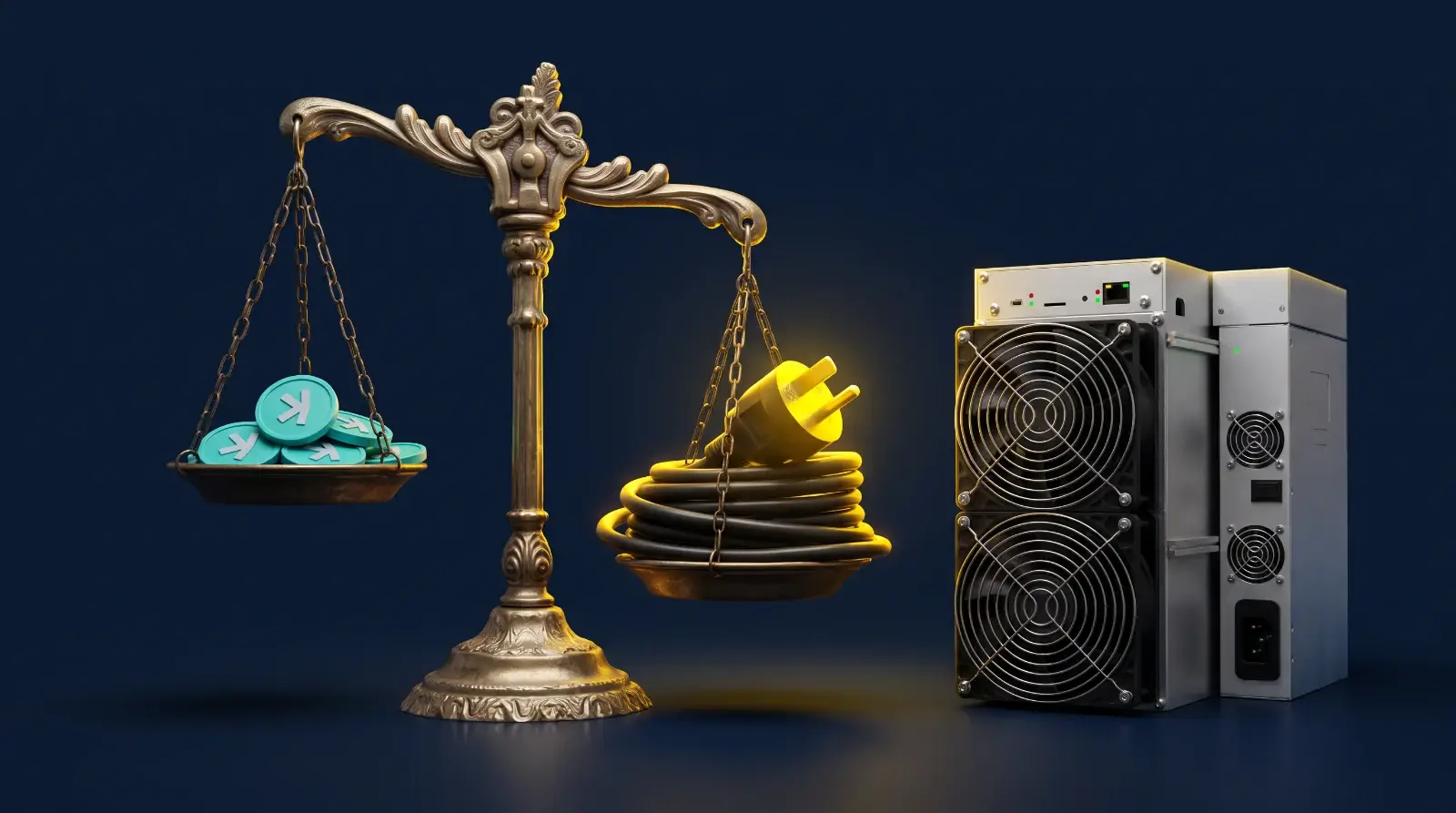
Mostly (but not always), the higher the version of the machine, the better the efficiency (price:performance:consumption). For example, the KS5L 12T has 2x the performance of the KS3m 6T, but the machine's consumption is the same. Therefore, if you have, say, €15,000, it is better to take 1x KS5L 12T (approx. 3kWh), than 2x KS3M 6T (2 machines thus a total of approx. 3+3 kWh).
But it all depends on the price of the machine. Because a 12T has 2x the performance of a 6T (and the same consumption), but if the price of the 12T machine is, for example, 5x higher than the 6T machine, then it makes no sense to buy the 12T. (and such cases exist).
How to compare it then?
(a ranking that will include the price of the machine, consumption, and the price of your electricity).
- Simply go to our Excel Profit Calculator.
- Enter your electricity price (works only on PC).
- You will see the result, which machine has what ROI in months (the ROI includes the price of the machine, consumption, and the price of electricity).
This is actually Method B) (for finding out which machine to buy).
Previous Statements
Statement (Mar 7, 2024) - Which machines to buy?
The choice is very simple (out of about 100 machines in the price list, in 99% of cases you choose between only 3 models). It depends on your electricity price:
3 categories of miners:
1. If you have FREE electricity (or up to €0.05/kWh) = BTC miners
BTC = the least risky machines (since you are mining the "sure thing," Bitcoin). If you were to pay a normal electricity price, BTC machines = the least profitable on the market. However, PARADOXICALLY, if you have free electricity, BTC = one of the most profitable machines on the market (on par with Kaspa machines). And at €0.05/kWh, the profits are still beautiful, hence BTC. But beware, the halving is in April, so if you want to buy BTC miners, definitely wait for the halving (prices of BTC machines should drop).
2. If you have €0.05/kWh+ = Kaspa / Litecoin
At €0.05/kWh and more (i.e., normal electricity price), look at L7 or Kaspa miners. Nothing else.
2a) KASPA:
- The most profitable miners produced in the last 4 years.
- Also the best-selling machines for the last 7 months (approx. 70% of orders are for Kaspa).
- But it is a smaller coin (which, on the other hand, gives it huge potential). An XY-fold price increase over a few months is a completely common thing in the crypto market for such high-quality small coins.
The Kaspa Coin: For us, a brutally high-quality coin (google the technology, developers, goals, what it solves, etc... huge potential). Block time: only 1 second (Bitcoin has 10 minutes) = virtually instant transactions, transfer fee under $0.01, and a widely-recognized founder, Dr. Yonatan Sompolinsky (scientist) – who was one of the first developers of Bitcoin from the very beginning in 2008 (directly with Satoshi Nakamoto); subsequently, from 2013, he was also a developer for the Ethereum coin. However, in neither cryptocurrency could he fully realize his innovative ideas, and so after 12 years of experience with cryptocurrency technologies in the 2 largest projects in the world (BTC and ETH), he decided to found his own cryptocurrency: Kaspa.
2b) L7 miners (LTC)
L7 are our preferred machines because:
- Very low risk (similar to BTC), as LTC is a coin that originated as a direct offshoot of Bitcoin itself (in 2011). A quality, stable coin, without fluctuations, from the era of veterans (coins that have been around for over 10 years) and the second most popular coin for payments in stores.
- At the same time, decent profits – not as high as with Kaspa (yet) but very stable profits (without major fluctuations, as LTC doesn't have large fluctuations).
- Simultaneously (in our opinion), a coin where we can predict with a very high probability where the price will be in about 1.5 years (at the market peak) – we expect about a 5-8x growth for LTC (at least to the previous ATH of €341/LTC; a realistic estimate is €500/LTC).
- LTC is the only major mining coin that has already undergone its Halving (August 2023) = so peace for the next 4 years...
Therefore, for us, L7 = The Best Ratio among all miners on the market (risk vs. current profits vs. probability of expected profits). We personally have been buying only L7 miners for ourselves for the last year or so!
3. Other machines
Worse compared to Kaspa / LTC / BTC. Either small profits and/or it's a shitcoin.../ or low (smaller) growth potential compared to the mentioned coins.
Addendum: Currently, a Kadena miner can also be a good choice (also a quality coin, profits are already very decent, and also decent growth potential, as the Kadena project also has a promising future).
Statement (Jan 5, 2024) - Which machines to buy?
Which miners to (Not) Buy currently?
1. Lowest↓ Profit & Risk – BTC miners
For years, it has been true that BTC machines = the least profitable on the market (but also the lowest risk because you are mining BTC – a "sure thing"). Buy them only if you have very cheap electricity, or completely free (under €0.04 / kWh). Paradox: if you have free electricity, BTC machines = some of the most profitable machines produced.
2. Highest↑ Profit & Risk – Kaspa miners
The most profitable miners produced (at least in the last 4 years). Also the best-selling machines for the last 5 months. But also the highest risk among all machines – because you are mining a smaller/newer coin. The risk is that in 3 months, the machine could mine 50% less but also 500% more than today. And that's why we definitely do not want to recommend whether to buy Kaspa machines or not (higher risk but profits can go up another 5-10x).
The Kaspa Coin: For us, it is a very high-quality coin. The fact that an ASIC miner was created for Kaspa means that Kaspa passed through the manufacturer's huge filter. We are (in our opinion) at the beginning of a bull run, i.e., in a 2-3 year period when virtually everything should grow again. It is still a small coin that is on many exchanges, but not yet listed on many large ones. Kaspa yields have been declining relatively in recent months – as we expected (due to difficulty), and Kaspa machine prices have also fallen accordingly. The craze has subsided, difficulty is now growing more moderately – if this continues, buying Kaspa machines will carry less and less risk than before.
3. Something in Between – L7 miners (LTC, DOGE…)
Very low risk (for us, on the level of BTC since LTC is a quality stable coin from 2011). Thanks to this, stable yields and also relatively well-predictable yields over a 2-4 year horizon. Therefore, for us, L7 is a top choice – the miner with the potential for the highest profit growth among all miners (in a 2-year horizon). We personally have been buying only L7 miners for ourselves for the last 3/4 of a year!
4. ETC machines & 5. All other miners
They mine only ETC or other small coins – frequent fluctuations, up and down, problems connecting to a pool for several coins, profits also not great... personally, ETC miners do not appeal to us very much. All other miners that are produced / sold have very low profits / and low potential for the future.
Statement (Aug 31, 2023) - Which machines to buy?
Which miners to buy currently?
1. Lowest↓ Profit & Risk – BTC miners
For years, it has been true that BTC machines = the least profitable on the market (but also the lowest risk). Buy them only if you have very cheap electricity, or completely free (under €0.04 / kWh). Paradox: if you have free electricity, BTC machines = some of the most profitable machines produced.
2. Highest↑ Profit & Risk – Kaspa miners
The most profitable miners produced (at least in the last 4 years). Also the best-selling machines for the last 5 months. But also the highest risk. The risk is that in 3 months, the machine could mine 50% less but also 500% more than today. Kaspa profits have dropped rapidly over the last 3 months due to difficulty (as we expected), and Kaspa machine prices have also fallen accordingly. Currently (Sep 2023), the decline in yields has stabilized significantly.
UPDATE 19.10.2023: The manufacturer has resumed production, so Kaspa machines are flowing into the market again and difficulty has been rising again for the last 2-3 weeks.
UPDATE 12.11.2023: Kaspa has grown by about 86% in the last 10 days, so yields have also increased significantly, the ROI on machine purchases is again around 3-4 months, and people have probably never ordered more machines from us than now.
3. Something in Between – L7 miners (LTC, DOGE…)
Very low risk and stable yields. For us, L7 is a top choice – the miner with the potential for the highest profit growth among all miners (in a 2-year horizon). We personally have been buying only L7 miners for ourselves for the last 3/4 of a year!
Detailed info on L7 (Why it has a paved road upwards)
In short: LTC is the only coin that has already passed its halving (Aug 2023) and: 1. the machine is still profitable (even at the market bottom and after the halving)... 2. a bull market is ahead of us, so coin prices and yields will rise x-fold... 3. and the halving is behind us, so peace for the next 4 years...; other cryptos, on the other hand, are still waiting for their halving. The biggest problem (but also the biggest opportunity) in mining are: Halving & Bear market. The best time to buy miners is at the market bottom, not a year later at the halving. And what would be absolutely most advantageous for us – if a cryptocurrency had its halving and market bottom at the same time. And that is exactly the case with LTC. The bottom for machine prices (including L7) is now (Aug/Sep 2023), and the LTC halving = was a month ago (early August 2023)... they overlap. Thanks to this, the price of L7 is extremely low.
Statement (May 24, 2023) - Which machines to buy?
*content updated: May 24, 2023
From a "profit/risk" perspective, there are currently 3 categories of machines:
#1 Least Risky (and least profitable) – Conservative
These are BTC machines – mining BTC – so a "sure thing," smaller coin fluctuations, thus the lowest risk – which is why the manufacturer sets higher prices for these machines. Currently, what they mine, you spend on electricity. *BTC machines are the least profitable, however, for those with free electricity (€0), BTC machines suddenly become the most profitable on the market. People still buy these BTC machines even now (even with zero profit) because they know that in a few months, they will be back in profitable numbers, and subsequently (in 1-2-3 years) they will be mining about 3-4-5x as much as today.
#2 The Exact Opposite (most profitable, also most risky)
Mining smaller altcoins – the most profitable machines on the market but also higher risk because they mine smaller coins that were mostly created about 2-4 years ago – e.g., Kadena, Nervos, etc. (miners KA3 for Kadena, K7 for Nervos). This means bigger price fluctuations (risk of a larger drop, but also a chance of an X-fold increase). The return on investment for these miners (with electricity already factored in) is about 7-12 months. Currently, these are the machines: Antminer K7, Antminer KA3, Antminer D9.
#3 Something in between
Mining high-quality altcoins – stable, no shitcoins – the old era of coins from 2011-2015 (small price fluctuations – similar to BTC, established projects...) – currently, this includes the L7 for LTC. We write "something in between," but L7 is actually closer to the more profitable machines in terms of profits, but closer to BTC machines in terms of risk... so higher profit, low risk. Currently, this is: Antminer L7 – with an ROI of about 12-16 months (depending on the electricity price).
*Our Choice: L7 is currently (and for the last few months) the best miner on the market for us – you mine stable LTC (low risk) – at the same time, beautiful profits even when we factor in electricity – also the best-selling machine for the last 14 months (since it has been produced).
BUT EVEN SO: It is about 100x More Important WHEN you buy the machines than WHAT machines you buy!
Out of all the variables, one is X-times more important (when you buy the machines) than the others and has (in our opinion) about an 80% share in the profit you will ultimately make from mining over x-years (the real key to success in investing in miners). Therefore, even if you bought the BEST machine on the market, but you buy at the peak of the market... Conversely, even if you bought the WORST machine, but you buy it at the bottom of the market (before a 3-year growth), it is extremely difficult not to make a profit from mining!
When to Buy Miners?
Thanks to the Halving, BTC moves in 4-year cycles (3 years up, 1 year down).
Buy miners when cryptocurrency prices are at their lowest (at the bottom) because that's when machine yields are lowest, and therefore miner prices are also at their lowest (the so-called bear market, when the market falls by 70-80% over about 12 months).
So, instead of €25,000, you buy the machine 1 year later for €5,000 (70-80% cheaper).
...continuation HERE: But how to know when the market is at its Bottom and when at its Peak?
Conversely, at the market peak (about 3 years from the bottom), you can sell your 2-3 year old used machine for many times its purchase price. When you buy at the bottom, for the next ~3 years, crypto prices and yields grow (today the machine mines €20/day, in 3 years it might be €100/day), and therefore the machine's price also increases 5x. If you bought it now at the bottom for €5,000, at the next peak, the price of the same machine (but new, unused) will be €25,000. You can sell your 2-3 year old used one for about €15,000 (+ it was mining and earning for you for those 2-3 years).
Therefore, even if you bought one of the worst miners, but you buy it at the right time (at the market bottom), it is very difficult not to make a profit from mining, because during the subsequent bull run, almost everything grows, even the lower-quality coins.
And that also means it's effectively irrelevant how much the machine earns today; what's important is how much it will earn tomorrow, in a month, in a year...
The machine simply mines for 5 years (1825 days) (the machine's lifespan), so today's yield is just 1 day out of 1825. It's more important to estimate future yields than to look at today's. A machine might mine €15 today (with €10 for electricity, so €5 net profit) with a poor ROI of XY months. But if you realize that now is the market bottom, and in 2-3 years crypto prices will be x-times higher, the machine will realistically pay for itself in, for example, 8 months (instead of the 40 months you see in the mining calculator today).
In short, the cycle looks like this:
- November 2021 = BTC Peak (and the entire market)
- November 2022 = BTC Bottom
- Autumn 2023 = Miner Price Bottom (delayed by 3/4 of a year from the coin bottom)
- End of 2025 = Market peak (Sell Everything – both mined coins and miners)
- 2026 = Wait it out (over 12 months, everything should fall by about -80% again)
- Beginning of 2027 = Market bottom (Buy new and cheap miners again, 80% cheaper than you sold them a year ago).
So, the Best Time to buy miners (in the last 4 years) was in autumn 2023.
Currently, machine prices are rising, but we are still near the bottom (about 70% from the previous peak).
For example, the price of L7 9050 in Dec 2021: €25,920 → price in Sep 2023: €4,360 → price in Jan 2024: €5,300 → Estimated price Dec 2025: €21,000 → Estimated price Jan 2027: €5,000.
Don't Miss It!
Investors Wait 4 LONG YEARS for the market bottom.
The next bottom is again in 4 years.
So, NOW or not until 2027.

Contact Us
Didn't find the info you need?
Want Expert Advice?
Contract Preview?
How does it all Work?
Contact us and one of our experts will assist you:
- +421949691788 / +420704736656
- support@miner-house.com
Our experts will advise you
Write to us and one of our experts will get back to you as soon as possible.
Our prices are the lowest in the entire EU!
If you found a lower price somewhere, send us the link and we'll contact you with our better offer right away.
Best offers
Join Risk Free
30 days refund
100% Safe
Secure Shopping
24x7 Support
Online 24 hours
Best Offers
Grab Now
Free Shipping
On all order over
Know Us

- Top SK-CZ vendor since 2015, now expanding across EU
- Buy directly from our EU wholesalers
- 29 wholesalers = always lowest ASIC prices
- Up to 2-year warranty on Bitmain miners
- Personal support: miner choice, profit calculation
- Free miner setup