

Is Mining Worth It? 14 Reasons People Mine (Not Just for the Money)
If it is really this good, why doesn't everyone mine? And where is the catch? We answer both honestly - the catch is at the very end of this article.
Coins up to -40% cheaper · anonymous, no-KYC coins · profit even when BTC stands still · and thanks to miners like you, the entire BTC network keeps running.
01 / Two ways to own BTC
Buy on an Exchange or Mine It Yourself
On paper, buying on an exchange wins on every practical measure. Here is the honest scorecard, before we explain why people mine anyway.
Buy BTC on an Exchange
- Min. investment: ~€10 (minimum exchange deposit)
- Time required: a few minutes - sign up, deposit, buy
- Knowledge needed: the more the better, but most people learn as they go - buy a small amount and figure it out in practice
- Easy to reverse: sell in one click for a ~0.02% fee, buy something else instead
Mine It Yourself
- Min. investment: miners cost several thousand euros
- Time required: order → delivery (7-10 days) → wallet + pool setup (~10 min) → running at home (~5 min) or hosted in a data center (within 1 day). Realistically mining within 7-10 days of ordering.
- Knowledge needed: the more the better - like any serious investment
- Hard to reverse: you are buying a physical machine worth thousands, so most people want to fully understand it first - which can take weeks
So on paper, mining loses 0:4. Buying on an exchange is faster, cheaper to start, needs no real research, and is trivial to reverse. Which raises an honest question - if mining is worse on every practical count, why do people, and entire companies, do it anyway?
02 / Then why mine at all?
Exchange 4:0 Mining? Something Doesn't Add Up.
So how is it possible that such a huge number of people and companies mine crypto? And not just mine - every single month they buy hundreds more miners on top of what they already run. Are all of these people and companies simply not very smart? Or is there something the scorecard above does not show?
Why don't they just buy BTC on an exchange instead?
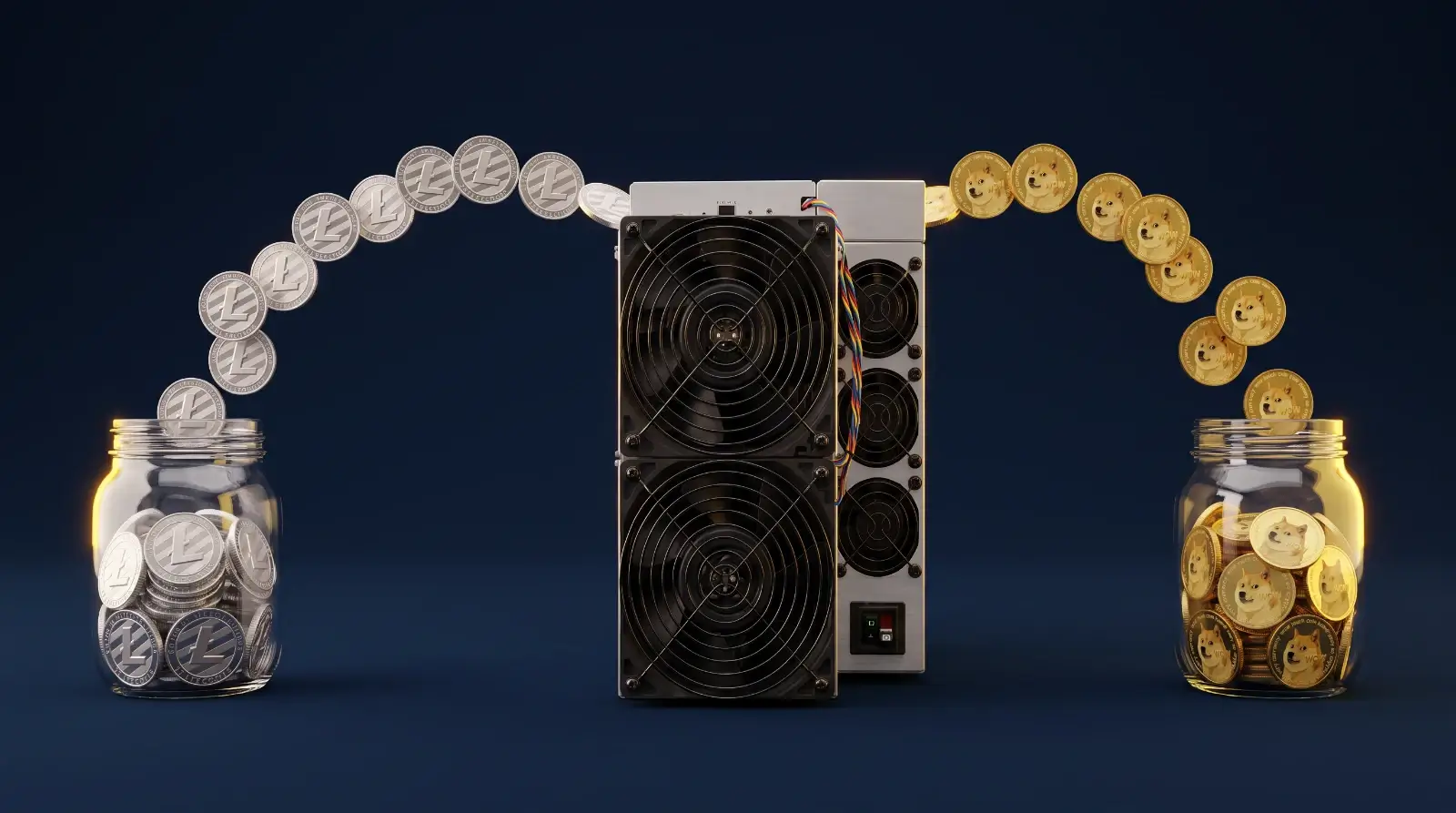
Large mining operations are not buying cheaper machines or cheaper electricity than anyone else - their pricing on both is typically only 10-20% better than what a small independent miner can get. So why do they choose to buy hundreds of miners a month and build entire data centers, instead of simply buying BTC on an exchange in minutes?
Building that capacity takes months and months:
- Buying land
- Negotiating cheap electricity contracts
- Engineering plans and building permits
- Grid connections
- Physical construction of the data center
- Hiring technicians for operation and repairs
Why go through all of that, when buying BTC on an exchange takes a few minutes and comes with zero of these headaches?
The answer is below - in the 14 reasons people choose mining anyway, even knowing it is slower, costlier to start, and harder to walk back.
03 / The real reasons
Why People Actually Mine
Not one silver-bullet reason - fourteen of them, financial and otherwise. Jump to any of them below.
Get BTC Up to -40% Cheaper
Buying BTC on an exchange means paying the full, often inflated, market price. Mining can get you the same coin for as much as 40% less. For example:
In daily terms:
- Electricity: €9/day (3.3 kWh machine, €0.11/kWh)
- Machine depreciation: €4/day (€7,300 machine over a 5-year lifespan)
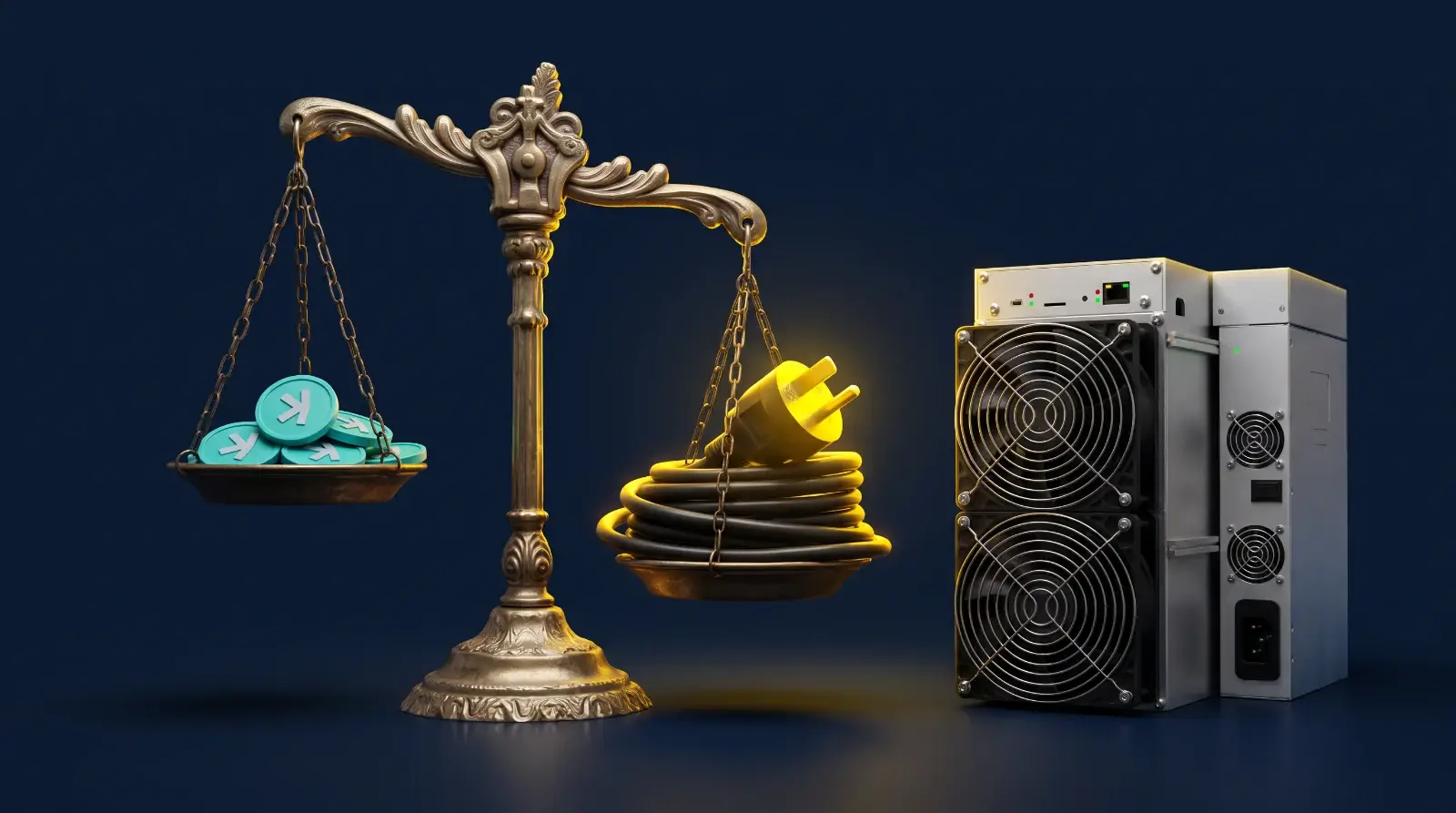
You received €20 worth of coins for €12 - up to 40% cheaper than buying the same coins on an exchange. This is the core reason mining exists at all: if it weren't cheaper, nobody would bother, since buying on an exchange is far easier.
-40% cheaper = 78% annual return = 15.3-month payback
Getting coins 40% cheaper is mathematically the same as saying the machine pays for itself in 15.3 months, or that it returns 78% a year. These are three ways of describing the same thing:
- 12-month ROI on the miner
- 100% annual profitability
- Coins acquired roughly 50% cheaper than the exchange price
If a machine has a 12-month payback, then once electricity is paid from what it mines, the leftover net profit covers the machine's cost within a year - after that, you're mining pure profit. In real numbers: a €4,800 machine netting €400/month pays for itself in exactly one year.
Mining Can't Stay Loss-Making - Or Bitcoin Itself Collapses
Mining is the foundation Bitcoin is built on. Without miners, no cryptocurrency can exist. If every miner on Earth switched off their machines at once, Bitcoin would stop functioning in that instant.
Two things mining machines physically do:
- Verify transactions - when someone sends 1 BTC, machines worldwide confirm the sender actually has the funds and that the transaction is legitimate.
- Store the blockchain - every mining machine holds an up-to-date copy of the entire transaction history: every wallet, every balance, everything.
This is what makes Bitcoin secure, stable, and tamper-proof:
- Nobody can fake or hack BTC - your transaction is verified by millions of mining machines worldwide.
- Nobody can rewrite wallet history - the record of your holdings exists on millions of machines simultaneously.
- If mining machines everywhere switched off, Bitcoin would stop working immediately.
That is why miners are the load-bearing wall of the entire system, and why every cryptocurrency depends on being mined. People only mine when it is profitable - more profitable than simply buying on an exchange. So the whole philosophy of Bitcoin depends on mining staying profitable: if it stopped paying off, miners would switch off, the network would lose security and stability, and the currency would suffer. Mining creates the network's security - without miners, BTC stops existing.
Anonymous Coins (No KYC)
Buying BTC on an exchange means registering and verifying your identity (name, ID document) - quick and simple, but it leaves a trail: the exchange holds your ID, your bank shows a transfer to a crypto exchange, and so does your tax record.
Mining instead gives you:
- Anonymous coins - mined coins land directly in your wallet. No name, no ID, not even an email address attached anywhere.
- Clean, newly-created coins - never previously used for anything illegal, and not on any blacklist.
You Earn From Mining Itself - Even When BTC Isn't Moving
That profit holds even if the exchange price has not moved a single cent since yesterday. Compare the two paths over one day:
- Buy on exchange: €12 in → €12 worth out today
- Mine: €12 in → €20 worth out today
Zoom out to 5 years: if BTC's exchange price does not move a cent in that time, buying on an exchange earned you nothing - mining still earned +66%. On an exchange you only profit from price movement, and only if it goes up. Mining pays you for the act of mining itself, regardless of price - which is why mining typically outperforms simply buying, whether the price rises, falls, or stands still.
You Can Still Profit When BTC Falls
Say BTC drops -20% in a day:
The exchange price fell, but mining still left you in profit: you spent €12 and mined €16 worth of coins.
Of course, if the drop is severe enough, mining eventually dips into a loss too - but a much smaller one than the exchange. Example: a -50% price crash still costs you €12/day to mine, but you now only mine €10/day worth - a -17% loss on mining, versus a -50% loss on the exchange.
Earn More, Risk Less - In Either Direction
If the price rises instead - say +20% - mining pulls further ahead of the exchange, not just even with it:
- You spent €12/day (miner + electricity)
- You mined €20/day worth (before any price move)
- BTC then rises 20%: your €20 worth of mined coins becomes €24
Mining is simply a step ahead - whether the exchange price is flat, falling, or rising.
A Second Profit: Hold and Sell Later
Everyone looks at today's mining profit. But about 95% of miners do not sell what they mine right away - they hold, expecting coins to be worth several times more in 1-3 years. So a machine that mined you €20 worth of coins today might mine coins worth €40-60 in two years.
Two profits, stacked:
- First profit - from mining itself (spent €12, mined €20 worth)
- Second profit - if you hold, and those €20 become €40
Net result: you invested €12-13, and in 2 years hold coins worth €40 - a total return around +207%.
A Third Profit: Resell Your Used Miner
When coin prices triple, mining machines earn 3x more too - and manufacturers raise new-unit prices to match almost immediately.
It is completely normal in this market to buy a machine for €3,000, use it for a year, and resell it for €7,500 - because a brand-new equivalent is now selling for €9,000 (3x the original price, because it now earns 3x more).
Same principle as gold: buy gold and wait for the price to rise - if it does not, you earn nothing. Buy a gold mine, and you earn from the act of mining itself, price movement aside. If gold prices also rise, you profit twice. And the mine itself becomes more valuable - a third profit.
Passive Income, Every Month
You do not mine - the machine does, on its own. Mining is not a job you show up to, and it is not a business you have to manage staff for. You buy the miner (after doing your homework), switch it on, and it mines by itself. Check in once a week to review output and profit - that is it.
That said, be realistic: most people picture passive income as €500-600 landing in their bank account every month. That is possible - you can sell mined coins daily if you want. We would not recommend it, though: crypto has historically trended upward, and coins worth €500 today could easily be worth double in a year or two.
A Robot That Works For You, 24/7/365
A miner is a robot working on your behalf around the clock - day, night, weekends, holidays, Christmas, non-stop, 365 days a year.
- Never sick, never tired
- No lunch breaks, no vacation
- Always working at 100% effort
All it asks for is electricity and an internet connection. A home money-printer, essentially - a computer that earns you cash.
A Physical Investment, Not Just a Digital One
Crypto itself is entirely virtual - digital money. Mining is the one part of it that is physical: an actual machine you own.
- A machine you physically hold in your hands.
- Even when it is hosted in a data center, it is still your machine - it is delivered to you first, and only then does a courier take it to the facility.
- You own it outright. No rented hash power - a real purchase of a real computer.
This is exactly why so many people choose mining: it is an investment in something real and tangible.
Already Have Solar Panels? Mining Multiplies Their Value
If you have solar (like most people with panels), your surplus energy typically either:
- goes to waste because you do not use it,
- or gets stored in a virtual battery - where you now pay around €0.07/kWh to store electricity you generated for free,
- or you buy a physical battery, which costs €5,000-15,000.
Mining puts that surplus to far better use. Selling surplus back to the grid nets around €0.10/kWh. Feed that same kWh into a miner instead, and it can produce €0.20-0.40 worth of coins - in strong cases, up to €0.80/kWh (a miner is required, of course).
Compare the economics over time: paying into a virtual battery (roughly €500/year, €2,500 over 5 years), or buying a €5,000-15,000 physical battery lasting about 10 years - versus a miner costing a few thousand euros that can turn each surplus kWh into up to 5x the value.
Real Technology Behind It - the Blockchain
BTC's exchange price is one thing. What it is built on is another: a technology already used by the world's largest banks.
- Blockchain enables fast, cheap transfers across the globe.
- A bank transfer to the US typically takes 3-5 days and costs €5-30 in fees.
- A Bitcoin transfer reaches anyone on Earth in about 10 minutes; many newer cryptocurrencies do it in 10 seconds, for a fee around $0.01.
And moving money is just one of hundreds of use cases banks and companies are already building on blockchain.
Scarcity - Only 21 Million BTC Will Ever Exist
Bitcoin, like most major cryptocurrencies, has a hard cap on how many coins will ever exist - 21 million, in Bitcoin's case. Same principle as gold: a fixed, limited supply.
More people, companies, and banks invest in crypto every year, while the supply of coins stays capped - which is structurally why the price tends to rise over time.
And this is still early: only around 3% of the world's population currently invests in crypto. Where does the price go once that reaches 6%? The more people want in, the higher the price goes - supply and demand.
04 / The honest part
So, Where Is the Catch?
Look back at the scorecard from section one - that is the catch, in full. Mining needs more capital up front, takes longer to get running, rewards people who do their homework, and is not something you casually reverse like an exchange trade. There is no hidden downside beyond that: the 14 reasons above are the genuine upside, and the 0:4 scorecard is the genuine cost of getting there.
That is exactly the part we help with. Since 2015 we have sold 4,300+ miners to 1,900+ clients - picking the right machine, sourcing cheap hosting, and knowing what actually pays off is precisely the research that makes mining feel as simple as buying on an exchange. Talk to us before you buy anything.
Ready to Look at Real Numbers?
We are not just a shop - we mine ourselves and can guide you on what, where and how to start. Free consultation, no commitment.