Category
Popular
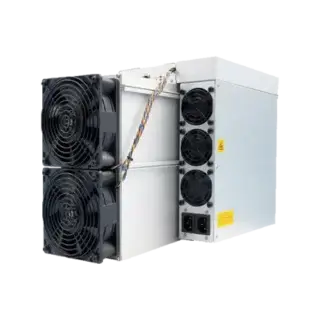
Product Showcase
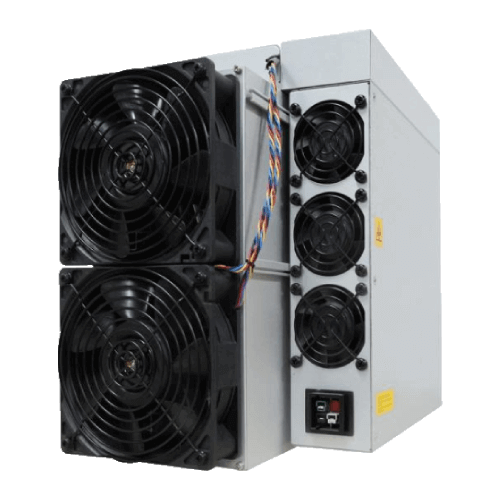


Solar Bitcoin Mining: Can Your Solar Panels Run a Miner for Free? (10 kWp Example, 3 Systems)
Solar Bitcoin Mining: Can Your Solar Panels Run a Miner for Free? (10 kWp Example, 3 Systems)
Solar PV System and Mining Bitcoin (BTC) or Other Cryptocurrencies
Solar bitcoin mining, that is, mining crypto from the surplus of your solar panels (PV), is becoming increasingly popular. And because solar is a renewable source, the mining itself is green. The real question is how to pick the right miner: the one that pays off best for you, given how big your surplus is and what your mining conditions are.
Is it worth it? A rough example in short, for a 1 kW machine running one month (720 kWh):
Free surplus power vs paid power
A) Someone who pays for electricity:
the machine earns about €53-71 gross, the power costs 720 kWh x €0.15 = €108. Result: a loss.
€108
power bill for 720 kWh
B) You, with free solar electricity:
the same €53-71, and €0 for power. Result: the whole amount is yours.
€0
power bill for 720 kWh
Bars are scaled to €108. Illustration, not a promise of any income.
Formula and data behind the €53-71
How the €53-71 is calculated: income per kWh = hashprice / 1,000 / (0.024 x efficiency in J/TH). Hashprice was 40.93 USD/PH/s/day on 21 Sep 2026, which is €35.62 at 1 EUR = 1.149 USD (ECB, 21 Sep 2026). At an assumed 20 J/TH that is €0.074 per kWh, at 15 J/TH €0.099 per kWh (the two efficiencies are assumptions, not a specific model).
The network has grown since (1,032.7 EH/s on 16 Oct 2026, mempool.space), so today's hashprice is probably a little lower. This is an illustration, not a promise of any income.
Surplus Calculator: What Does a Mining kWh Cost You?
With JavaScript enabled you can enter your own surplus and price here. The table below shows the 570 W example at €0.15 per kWh.
Surplus = production minus your own use. W = MWh a year x 1,000,000 / 8,760.
A machine of about 570 W uses your whole surplus.
| System | Average price | vs break-even |
|---|---|---|
| 1: all year at home, about 570 W | about €0.04 | below €0.074 |
| 2: home in summer, hosting in winter (hosting €0.10; machine about 2x your surplus, 1,140 W) | about €0.069 | below €0.074 |
| 3: only on solar surplus | €0.00 | below €0.074 |
Estimate, not a promise. Model: System 1 = your price x (25% x c² + (1 - c)), where c is the share of the machine covered by your surplus. At c = 1 that is 25% of your price, about €0.04 at €0.15. System 2: (0% + 50% + hosting + hosting) / 4 of your price, hosting assumed at €0.10 per kWh; System 2 figures in the text assume a machine about twice your surplus. System 3: €0.00 per kWh.
Data: hashprice 40.93 USD/PH/s/day (21 Sep 2026) and 1 EUR = 1.149 USD (ECB, 21 Sep 2026), break-even = hashprice / 1,000 / (0.024 x J/TH), at assumed 20 and 15 J/TH. Network 1,032.7 EH/s (mempool.space, 16 Oct 2026), so today's hashprice is probably a little lower. EU households paid between about €0.11 (Hungary) and €0.40 (Ireland) per kWh in the second half of 2025 (Eurostat). The 10 kWp, 10 MWh and 5 MWh figures are illustrative.
Quick Explanation: Which Miner to Buy (What Power Draw) With a 10 kWp Solar PV System?
Simple. The most important criterion is the miner's profit: how much will you earn, right? Easy :D. But profit depends directly on your electricity price. From the grid you see your price per kWh on the invoice, and it is fixed (it changes once a year at most).
With solar panels it is more complicated: in summer the panels produce a lot, at night nothing, in winter little. So in summer your electricity is almost free, at night you pay, and so on. It also matters whether you have a virtual battery (a net metering / grid storage scheme offered by some EU utilities) or a physical one, and how much power you use in the house.
That is why the examples below show your average price per kWh over the whole year. Once you know it, choosing a machine comes down to 3 simple steps:
- Know your electricity price. Enter it into the profitability ranking and you will see which machines pay back fastest at your price. At every price a different machine wins.
- Choose by power draw. Because you have solar, you also have to choose the machine by consumption: how much power your panels can spare. You cannot buy a machine with a big power draw.
- The most profitable machine is not always the best one (for the future). A miner's earnings move every day with the coin price on the exchange. In 2 years a machine can earn 5x more or 2x less per day than today (for reference, 1 BTC = €73,063 on 16 Oct 2026, CoinGecko). Where the coin price will be in 1, 2, 3 or 5 years depends mostly on the quality and size of the coin. Simply put, the bigger, better and more stable the coins you mine, the more stable your future earnings. With small, young coins the earnings can swing up and down.
A Real Example: 10 kWp Solar PV System, 570 W of Free Power
You have a 10 kWp solar PV system. In central Europe it produces roughly 10 MWh of electricity a year. In the house you use, say, 5 MWh a year, so 5 MWh is left over. 5 MWh a year / 365 days / 24 hours = 0.57 kW, so on average 570 W of free power.
If you buy a miner with a 570 W power draw, you cover its whole consumption for the whole year from your own PV system, for free.
But of course solar produces the most in summer, nothing at night and less in winter. You have enough electricity, but for the night and the winter you have to store it somewhere. If you have a virtual battery, you pay a network fee for it (roughly half of the full electricity price).
The resulting electricity price (simplified): during the day you run the miner directly from solar all year, but every night you pay for the virtual battery. So you pay about half the electricity price for half the year (every night).
Your average electricity price over the year is then about 25% of the normal market price. 25% of €0.15 is €0.0375 per kWh (approximately). Add a bit, because in spring, autumn and winter you will also pay for the virtual battery part of the time, when the sun is not shining.
These are approximate calculations. For exact numbers you need to know what you pay for the virtual battery (usually about half of the electricity price) or how big your physical battery is, where you live, and how sunny that year is. There are days when the panels produce almost nothing even at noon. On the other hand, the virtual battery fee is usually lower than the half we used, to keep the maths simple.
The €0.15 per kWh used throughout is an illustrative household price. In the second half of 2025, EU households paid between about €0.11 (Hungary) and €0.40 (Ireland) per kWh (Eurostat). The percentages work for any price; only the euro amounts change.
Where and With What Size Machine to Mine: 4 Approaches for Each Battery Type
The calculation is for a free surplus of 5 MWh a year (570 W). The electricity price logic is always the same: if you have only 3 MWh a year instead of 5 MWh, look at a machine of about 340 W (3,000 kWh / 8,760 h = 0.34 kW) instead of 570 W.
#A You Have a Physical Battery: 4 Approaches
You have the electricity for the whole machine free all year (€0 per kWh).
Half of its consumption you cover from your PV system, the other half you pay for. You run it directly from the panels, and when the sun is not shining (and at night) from the electricity stored in the battery; the rest you buy. So half of the electricity you pay for, half you have free. Average price = 50% of the market price (€0.075 per kWh).
This makes no sense, because at home your PV surplus is left unused for nothing.
In summer (6 months) you mine for free (during the day directly from the panels, at night from the physical battery). The other half of the year you pay for hosting. With hosting at €0.10 per kWh and a household price of €0.15 per kWh, hosting is 67% of the normal price. Overall: half the year free (0%), half the year at 67%, so the yearly average is 33% of the market price (€0.05 per kWh).
#B You Have a Virtual Battery: 4 Approaches
The electricity for the whole machine is free all year (0%). At night, though, you take the produced electricity back from the virtual battery, and for that you pay about 50% of the total electricity price. So your yearly average is half the price (the virtual battery) for half the year (at night) = 25% of the market price (€0.0375 per kWh).
Half of the consumption you cover from the panels for free, the other half you pay for. Simplified: summer daytime from the PV system (0% of the price). Summer night partly from the virtual battery at 50% and partly at 100%, so summer night = 75% of the price. Winter night you pay for electricity (100%). Winter daytime partly paid and partly from the panels (50%). Yearly average: (0% + 75% + 100% + 50%) / 4 = 56% of the market price (€0.084 per kWh).
As with the physical battery, this makes no sense. At home your PV surplus is left unused: you have 5 MWh a year free, but use only 2.5 MWh.
Simplified: in summer during the day the electricity is free (0%), at night you pay the virtual battery (50%), and in winter (day and night) you pay hosting. With hosting at €0.10 per kWh (and a normal price of €0.15) that is 67% of the market price. Yearly average: (0% + 50% + 67% + 67%) / 4 = 46% of the market price (€0.069 per kWh).
Same calculation: free surplus 5 MWh a year (570 W).
Enter this electricity price into the profitability ranking. It shows the payback of each machine, so you know exactly which miner is best for you with your surplus.
So in both cases (physical or virtual battery), options #1 and #4 come out as the most efficient. Even with option #2 your electricity price is lower than a datacentre at €0.10 per kWh. So if you choose a small machine, your electricity price will be very low (great).
If you want a bigger machine and mine at home, you still get a better average price than datacentre electricity at €0.10 per kWh. (Options #3 make no sense.)
How to Choose a Miner (So You Actually Make a Profit)
Calculating the payback of a mining machine (GPU or ASIC miner) is very easy. You only need your electricity price per kWh. Enter it into the profitability ranking and you get a ranking of mining devices by speed of payback (daily mining income, minus electricity, equals net profit, and payback in months).
With regular grid electricity, look at your bill. With solar panels it is more complicated, because they produce the most in summer during the day, nothing at night and less in winter, so you need a yearly average. The steps: what is the output of your PV system, how much of it do you use, and how much surplus is left over per year?
Typical Example: 10 kWp Solar PV System, 5 MWh Consumption
This is a typical case our clients call us about.
A client has a 10 kWp solar PV system. In central Europe, with our climate (mainly the number of sunny hours a year), this system produces about 10 MWh of electricity over a whole year. (In southern countries such as Spain, the same 10 kWp system can produce up to 15 MWh, because there are more sunny hours.)
The household uses about 5 MWh a year. So 5 MWh of surplus is left over, which he can use, for example, for mining.
Per hour: 5 MWh a year = 5,000 kWh a year, divided by 365 days and by 24 hours = 0.57 kW (570 W) of free power he can use for mining crypto.
The next question is whether you use a virtual battery or a physical one.
First, some theory. If you buy regular electricity from the grid (no solar), you pay for example €0.15 per kWh. That price always has 2 parts:
- Commodity (the electricity itself): for example €0.09 per kWh
- Distribution (getting the electricity through the cables to your home): for example €0.06 per kWh
Together, for every 1 kWh you pay 0.09 + 0.06 = €0.15 per kWh. So: electricity €0.15 per kWh = 1) commodity €0.09 + 2) distribution €0.06.
If you have solar, the panels produce the electricity (the commodity) for free. But if you do not use it as it is produced, you have to store it somewhere, and that costs money.
With a virtual battery you normally pay the distribution fee. If in summer during the day you hand 1 kWh produced by your panels to the virtual battery, and later (say, at night) you take that 1 kWh back, you pay only the distribution fee (for example €0.06 per kWh). You pay for distribution because you sent that 1 kWh into the grid and now you want it back.
With a physical battery you pay no distribution fee, but you pay for buying the battery, which is still fairly expensive. Let us calculate with a virtual battery.
570 W Surplus (+ Virtual Battery) = 3 Options
System 1: Mine All Year Round and...
a) Buy a machine that uses about those 570 W.
You cover the machine's whole consumption from your PV system (so the electricity for the machine is completely free). But you use the virtual battery, which you pay for.
If the standard electricity price is, for example, €0.15 per kWh, you have solar and so you pay only for distribution (€0.06 per kWh), and even that only when the panels are not producing and the miner has to be covered from stored surplus (every night, and partly during the day in winter).
Simplified: if all the solar production flowed through the virtual battery, your average price over the year would be €0.06 per kWh. But in summer during the day you run the miner directly from the panels, and partly in spring, autumn and winter too. All in all:
Your estimated average electricity price over the year is around €0.04 per kWh.
Another way to calculate it (same result): daytime 0% of the price, night 40% (€0.06 of €0.15), together 20% of the normal price (€0.03 per kWh). In winter you will not run the miner from direct solar all day, so your real average will be rather €0.04 per kWh (against a normal €0.15). These are rough calculations, but they show the point.
b) Buy a machine with a power draw of, say, 900 W (even though your solar surplus is only 570 W).
The remaining 330 W you will pay for.
Here it depends on exactly what electricity price you have (if you buy it from a distributor). This option seems far less profitable (your yearly average will certainly not be €0.04 per kWh, but maybe €0.07 per kWh). But look at it from another angle.
A miner earns a gross amount for every kWh it uses: about €0.074 per kWh at 20 J/TH and €0.099 per kWh at 15 J/TH (calculation in the first section). You paid €0.07 per kWh for that kWh. So the margin is smaller than in the previous case, but it can still be positive, especially with an efficient machine.
In money: a 900 W machine uses 900 W x 24 h x 30 days = 648 kWh a month. At €0.04 per kWh that is about €26 of electricity, at €0.07 per kWh about €45. The machine's gross income is about €48-64. You pay more for electricity, but the machine also mines more.
The margin per kWh is thin with a less efficient machine, so check your own numbers.
System 2: At Home in Summer, in a Datacentre in Winter
In summer, when your panels produce the most, you mine at home, and in winter you simply place the machine in a datacentre (hosting), where electricity is cheaper in the long run.
In that case (if your average yearly surplus is, for example, 570 W), it is definitely more efficient to go for a machine with a power draw of, for example, even 1,000 W.
In summer during the day your panels cover the miner's whole consumption directly, with a surplus you use right away at night. In the winter months you use datacentre electricity, which is cheaper at the locations below (from €0.09 per kWh in Norway/Finland).
Electricity in hosting is, for example, €0.10 per kWh. That is more than your average with solar (€0.04-0.06 per kWh), but less than the €0.15 you would pay your supplier. For reference, our hosting starts at €0.09 per kWh in Norway / Finland; Levice (SK) and Trutnov (CZ) are €0.13 and Sereď (SK) €0.16 (October 2026).
Only the locations below your own supplier's price are cheaper than your grid electricity, so compare with your bill.
System 3: Mine Only When You Have Surplus From Solar
You will not use any electricity from the virtual battery. You mine only when the sun is shining and the panels are producing.
In this case your electricity price is €0.00 per kWh, so you can also buy older (and therefore cheaper) machine models that lose money at normal (or even cheaper) electricity. These are mostly BTC miners. With free electricity they stay in profit for as long as the hashprice covers their running costs. Details: how to choose the right miner.
But if you buy a normal miner that earns more per kWh than your electricity costs, this system makes no sense. At the 21 Sep 2026 hashprice the break-even is about €0.074-0.099 per kWh, depending on the machine's efficiency (calculation in the first section). If your paid electricity costs less than that, there is no point switching the miner off just because your panels are not producing right now.
On the contrary, if you switch the machine off, you lose profit.
Noise: Will the Machine Roar?
Another factor when choosing a machine is its noise.
1. Big miners = 3,000 W.
That big power draw means big fans that cool the machine, and high fan speeds. That makes a lot of noise (easily 70 to 75 decibels, dB).
There are simple and effective fixes for this too: soundproofing enclosures are reported to cut a machine's noise by up to 95%.
A small disadvantage is that you need a bit more space for them. For example, an external radial fan that you attach to the miner is about 40 x 40 x 30 cm. These systems cost around €150-400.
If you have a separate space where noise does not matter, you do not have to deal with soundproofing at all.
2. Smaller miners = 100-800 W.
In the vast majority of cases clients have a solar surplus of around 400-800 W anyway, which means they buy smaller machines (with a lower power draw).
Lower power draw = smaller fans (or no fans at all) and lower fan speeds, which make only minimal noise or none.
These miners can usually be placed anywhere in the home (the noise is almost nothing, similar to a normal desktop PC). They are also much smaller (only around 15 x 15 x 10 cm).
Heat From Miners for Heating
A by-product of mining crypto is heat. The chips in the miner perform thousands of mathematical operations and heat up. And again (as with noise):
- Bigger miners (higher power draw) = more heat
- Small miners (lower power draw) = less heat
Specifically: up to roughly 95% of the consumed power ends up as heat.
So you can power a miner from your solar electricity ("free") and still heat with its heat. The miner creates a second (indirect) income in the form of saved heating costs, which improves the payback even more.
TIP: the opposite view:
- You can buy a 3 kW electric boiler that only heats.
- Or you can buy a 3 kW miner that heats and, while doing it, also produces cryptocurrency.
Of course this is a deeper topic: how exactly to heat with a miner (there are several ways).
Frequently Asked Questions About Mining With Solar Panels
Is it worth mining only 8 hours a day (when the sun is shining)?
Is it worth mining with the machine on only when the sun is shining, or should you leave it on at night too?
A simplified example:
- During the day the miner mines, say, €10, and the electricity is free from the PV system, so your net profit is €10.
- At night the miner mines €10 as well, but you pay, say, €5 for the electricity, so your net profit is €5.
Mining can be profitable even with paid electricity, as long as your price is below your machine's break-even. At the 21 Sep 2026 hashprice that is about €0.074-0.099 per kWh, depending on efficiency (calculation in the first section). In this example the night power costs less than the machine mines, so the profit is smaller, but it is still a profit.
In other words: if you switch the machine off at night, you lose €5 of profit every day.
A night tariff is usually cheaper than the daytime one, which helps you stay below the break-even.
The exact numbers depend on how efficient your machine is and what price you pay at night. If a machine would lose money on paid electricity, the answer is the opposite: run it only on solar.
Can I control the miner remotely?
Yes, you can. You can control mining devices remotely in 4 ways:
- Wi-Fi socket / Wi-Fi extension lead: you plug the miner into a smart socket and control it from a mobile app, even hundreds of kilometres away. It is a hard on/off, which is fine for miners, because they have no power switch anyway. Plug it in and the miner starts automatically.
- Wi-Fi circuit breaker: the same principle, you control the whole breaker from an app.
- VPN connection: secure remote access to the miner's settings, wherever you are.
- Remote desktop (AnyDesk, TeamViewer): you see and control the screen of another computer as if you were next to it. For miners this means a computer on the same network as the miner.
Where do you earn more: selling electricity to the grid or mining?
You can sell your solar surplus to the grid.
The feed-in price is usually a share of the exchange spot price and differs a lot between countries and contracts. Say you are paid €0.05 per kWh fed in (check your contract). A miner earns a gross of about €0.074 per kWh at 20 J/TH and €0.099 at 15 J/TH, and that moves with the coin price and difficulty.
So per kWh, mining can bring more than selling, but not by default, and not without buying a machine. Selling needs no hardware and carries no coin-price risk. Compare both in the profitability ranking.
Three-phase: How do I load all 3 phases?
There are three ways to solve it.
A lot of people ask this. If you connect a single-phase machine to only one phase, the other 2 phases (L2 and L3) are unused, which creates an unbalanced load. The solar inverter may then not produce efficiently, or may feed the grid "unevenly", which can be a problem.
A) Buy a three-phase machine directly.
All hydro-cooled machines are three-phase (typically about 5 kW or more). Some air-cooled machines are also made three-phase (around 3.5 kW).
B) Buy three single-phase machines.
Either classic big 3 kW machines, or smaller machines that have a lower power draw from the factory (from 100 W and 300 W up to about 1,500 W).
C) Use a transformer or balancer.
A symmetrising transformer (load balancer / phase balancer) splits a single-phase load evenly across all 3 phases. For example an "Open Delta" transformer, or an electronic solution such as Fronius Symo + Smart Meter. Disadvantages: price (€100-500) and a more complicated installation (an expert has to connect it).
Or simply split the appliances in the household and the miners between the phases. For example, connect the miners to phases 1 and 2, and the household appliances to phase 3.
Pick a Miner That Fits Your Surplus
Know your surplus, know your price, then choose the machine. Own panels, or hosting from €0.09 per kWh.
Disclaimer: this page is general information, not financial, tax or electrical-installation advice. All calculations are illustrations built on the stated assumptions; they are not a forecast and do not promise any income. Mining income depends on the coin price, network difficulty, hardware efficiency and your electricity price, and can fall to zero. Rules for connecting extra load and for virtual battery schemes differ by country and utility, so check with your grid operator and a qualified electrician before you connect a miner.

Contact Us
Didn't find the info you need?
Want Expert Advice?
Contract Preview?
How does it all Work?
Contact us and one of our experts will assist you:
- +421949691788 / +420704736656
- support@miner-house.com
Our experts will advise you
Write to us and one of our experts will get back to you as soon as possible.
Our prices are the lowest in the entire EU!
If you found a lower price somewhere, send us the link and we'll contact you with our better offer right away.
Best offers
Join Risk Free
30 days refund
100% Safe
Secure Shopping
24x7 Support
Online 24 hours
Best Offers
Grab Now
Free Shipping
On all order over
Know Us

- Top SK-CZ vendor since 2015, now expanding across EU
- Buy directly from our EU wholesalers
- 29 wholesalers = always lowest ASIC prices
- Up to 2-year warranty on Bitmain miners
- Personal support: miner choice, profit calculation
- Free miner setup