Popular
Product Showcase


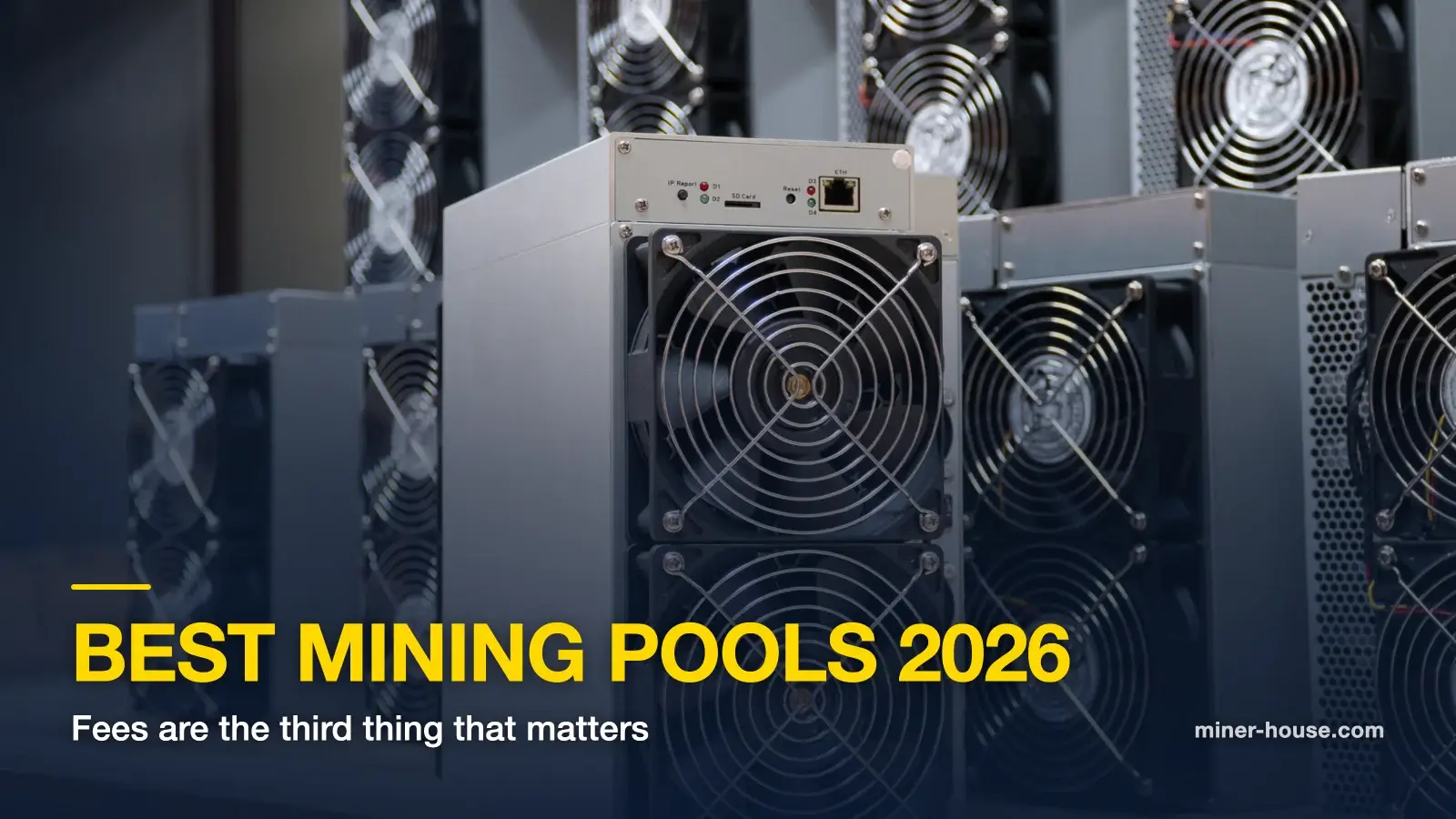
AntPool advertises PPLNS at a 0% fee. That looks like the best mining pool deal on the market — and for most people reading this, it isn't. The fee is the number every comparison ranks by, yet for anyone running one or two machines it's the third most important factor. Your payout model and the pool's minimum payout threshold shape your actual income far more than a two-point fee difference does. This guide puts those three factors in the right order, then names the strongest pools for each coin worth mining today — Bitcoin, Zcash and the Litecoin/Dogecoin pair.
What a mining pool actually does
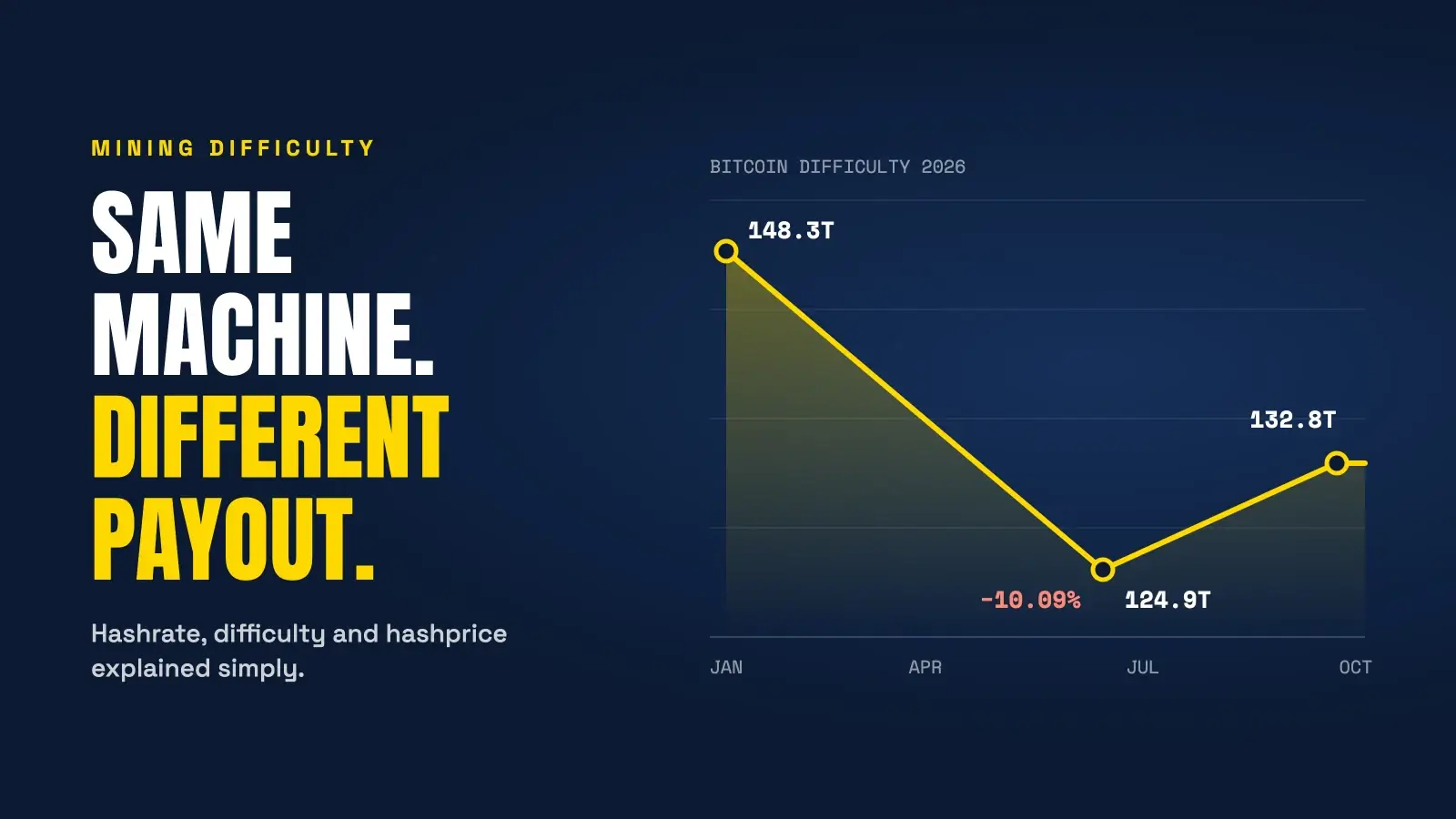
Your machine can't realistically find a block alone, so a pool combines thousands of miners into one hashrate and splits the proceeds. Mechanically, the pool hands your miner an easier target than the real network: Bitcoin's difficulty exceeds 100 trillion, while a pool might set your share difficulty at a few billion. Your machine therefore submits "shares" every few seconds, proving continuous work, and the pool uses that record to calculate what you're owed.
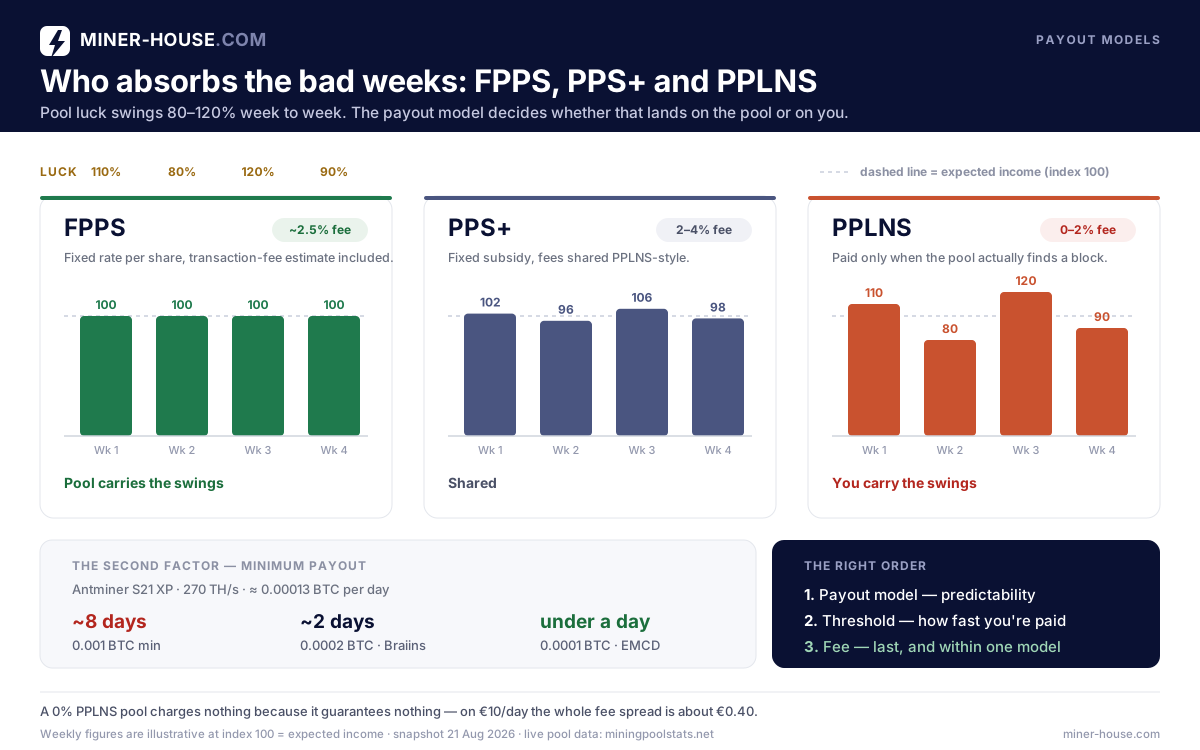
One concept explains most of what follows: pool luck. In any given week a pool might find blocks faster than expected (120% luck) or slower (80%), evening out to roughly 100% over the long run. Whether that swing lands on you or on the pool is precisely what the payout model decides. The basics of how mining works cover the underlying mechanism in more depth.
The three numbers that decide your income — in the right order
1. Payout model — who absorbs the bad weeks
| Model | How you get paid | Who carries the variance |
|---|---|---|
| FPPS | Fixed rate per share, including an estimated transaction-fee component | The pool — most predictable income |
| PPS+ | Fixed rate for the block subsidy; transaction fees shared PPLNS-style | Split — stable base, variable fee upside |
| PPLNS | Share of the reward when the pool actually finds a block | You — nothing during dry spells |
| SOLO | Everything, if you find a block yourself | You — all or nothing |
This is why a 0% PPLNS offer deserves scepticism. The pool charges nothing because it guarantees nothing: during an unlucky stretch your income simply drops. FPPS at 2.5% costs more on paper while delivering steadier cash flow, and steadier cash flow is what makes hosting fees and electricity bills payable. PPLNS does reward relentless uptime, though — so it fits miners running 24/7 in a datacentre better than a home setup with occasional outages.
2. Payout threshold — the trap for small miners
Here's the factor almost no guide highlights, even though it's the one that bites first. Every pool sets a minimum balance before it pays you out, and on a single machine that minimum determines whether you're paid daily or wait over a week.
Take an Antminer S21 XP at 270 TH/s, earning roughly 0.00013 BTC per day at current price and difficulty:
| Pool minimum | Time to your first payout |
|---|---|
| 0.001 BTC | About 8 days |
| 0.0002 BTC (Braiins) | Roughly 2 days |
| 0.0001 BTC (EMCD) | Under a day |
An eight-day wait isn't fatal, yet it becomes one with older or smaller hardware, where the same threshold can stretch into weeks of unpaid balance sitting on someone else's platform. Consequently, if you run a single machine, check the threshold before the fee.
3. Fee — real, but rarely decisive
Fees across major pools cluster between 0% and 4%, so the spread on a machine earning €10 a day amounts to roughly €0.40. Meanwhile switching from PPLNS to FPPS can change week-to-week income by considerably more than that. Compare fees last, and always alongside the model they're attached to.
Best mining pool for Bitcoin
| Pool | Fee / model | Best for |
|---|---|---|
| Foundry USA | Institutional terms | Largest pool (~30% share); North American operations |
| AntPool | 2.5% FPPS or 0% PPLNS | Bitmain hardware owners wanting a default choice |
| ViaBTC | 4% PPS+ / 2% PPLNS / 1–2% SOLO | Switching models as conditions change; strong in Eastern Europe |
| Braiins | ~2.5% FPPS | Low 0.0002 BTC threshold, Stratum V2 support |
| EMCD | 4%, 0.0001 BTC min | EU-based miners; fastest payouts for small setups |
| Ocean | Non-custodial, TIDES | Paid directly via coinbase transactions — no counterparty risk |
For a European home or hosted miner running one to three machines, Braiins and EMCD generally beat the giants — not on fees, but on how quickly the money reaches your wallet.
Best mining pool for Zcash
Pool choice matters more on Zcash than on Bitcoin, simply because the network is smaller and hashrate concentration affects block frequency directly.
| Pool | Model | Minimum payout |
|---|---|---|
| Flypool (Bitfly) | PPLNS | Among the two largest ZEC pools |
| 2Miners | PPLNS or PPS+ | 0.01 ZEC |
| ViaBTC / F2Pool | PPS variants | 0.1 ZEC |
The tenfold threshold gap between 2Miners and the larger operators is the practical deciding factor for a single Z15. Our complete Zcash mining guide covers the wallet setup and economics that go with it.
Best mining pools for Litecoin and Dogecoin
Scrypt mining has a genuine bonus: merged mining. Because Dogecoin uses AuxPoW aligned with Litecoin, the same hashrate earns both coins simultaneously — you're not choosing between them, and several pools add smaller merged coins on top.
| Pool | Fee / model | Notes |
|---|---|---|
| EMCD | 1.5% PPS+/FPPS on DOGE | Lowest fee of the majors; EU/CIS focus |
| AntPool | 3% PPS (Scrypt) | Bitmain integration, merged LTC+DOGE |
| ViaBTC | 4% PPS+ / 2% PPLNS / 1% SOLO | Most payout flexibility; merged DOGE standard |
| F2Pool | 4% PPS | Largest DOGE hashrate; merges seven extra Scrypt coins |
| LitecoinPool | PPS | Pays LTC and DOGE as separate payouts |
| ProHashing | FPPS | Can pay you out in any supported coin |
Pool size: the trade-off nobody wants to discuss
Bigger pools find blocks more often, which smooths your income — a real advantage, especially on PPLNS. There's a cost, though, and it isn't yours alone: the top three Bitcoin pools now control over 59% of network hashrate, with Foundry USA alone near 30%. Concentration at that level weakens the censorship resistance that makes the network worth mining in the first place.
We're not going to pretend that's a reason to accept worse payouts. But when two pools serve you equally well, choosing the smaller one costs you nothing and helps the network. You can check current distribution yourself on MiningPoolStats, which also lists server locations — useful for picking low-latency endpoints from Europe.
What about solo mining?
Solo mining means keeping an entire block reward, and the arithmetic explains why almost nobody does it. A single Antminer Z15 Pro would expect roughly 250 to 400 days between Zcash blocks; on Bitcoin, one machine faces statistically years of waiting. It's a lottery ticket with a very long fuse, sensible only with substantial hashpower behind it.
Choosing your pool in five minutes
- Pick the model first. Want predictable income? FPPS. Mining 24/7 with excellent uptime and comfortable with swings? PPLNS.
- Check the threshold against your machine's daily output. Anything beyond about a week of waiting deserves a second look.
- Then compare fees — within the same model only, since cross-model comparisons are meaningless.
- Choose a nearby server. Lower latency means fewer stale shares, and European endpoints matter if you mine from the EU.
- Set a backup pool in your miner's configuration. When your primary goes down, the machine keeps earning instead of idling.
Uptime rewards you under every model, which is one more reason miners on PPLNS often end up in a hosted environment rather than at home.
FAQ: choosing the best mining pool
What is the best mining pool in 2026?
Is PPLNS or FPPS better?
Are 0% fee mining pools worth it?
How much do mining pools charge?
Can I mine Litecoin and Dogecoin at the same time?
Should I use more than one mining pool?
The pool matters. The electricity price matters more.
A better pool might improve your return by a few percent — but your power rate decides whether there's a return at all. We've sold and hosted miners across Europe since 2015, so send us your €/kWh and we'll tell you honestly what your setup earns. Check the numbers in our profitability guide, pick hardware with our miner selection guide, run machines at industrial rates in our hosting datacentre, or browse miners in stock.
Disclaimer: We are not financial advisors. Pool fees, payout thresholds and hashrate distribution change frequently — every figure above is a snapshot for 21 August 2026, so verify current terms on the pool's own site before connecting your machines. Mining profitability also varies daily with coin prices and network difficulty.