Popular
Product Showcase


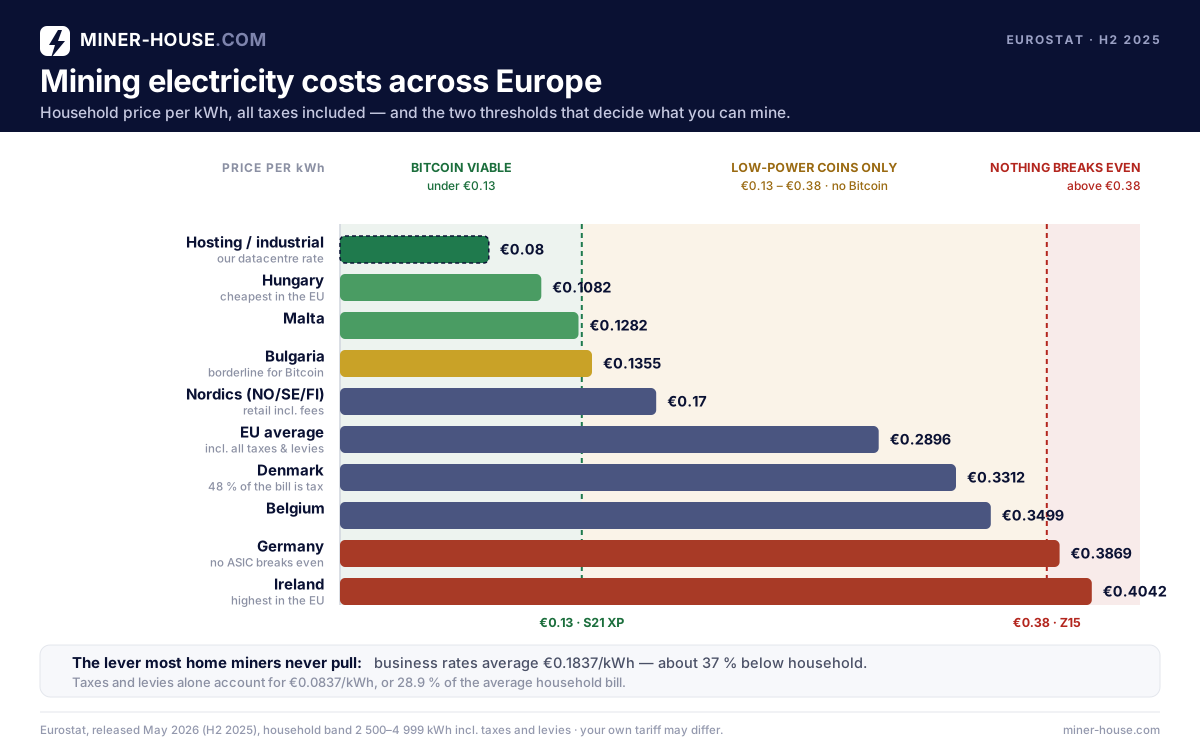
Mining electricity costs decide whether a machine earns or bleeds — and in Europe, the country you live in swings that answer by a factor of nearly four. Official Eurostat figures put the EU average household rate at €0.2896/kWh, yet Hungary pays €0.1082 while Ireland pays €0.4042. The same Antminer therefore costs €284 a month to run in Budapest and €1,061 in Dublin. Most mining guides quote a single convenient number and move on. This one maps the real European picture, machine by machine and country by country — including the finding that surprises even experienced miners: in Germany and Ireland, no ASIC is profitable at a household tariff today.
What one miner actually costs per month
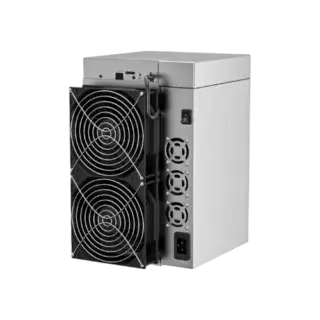
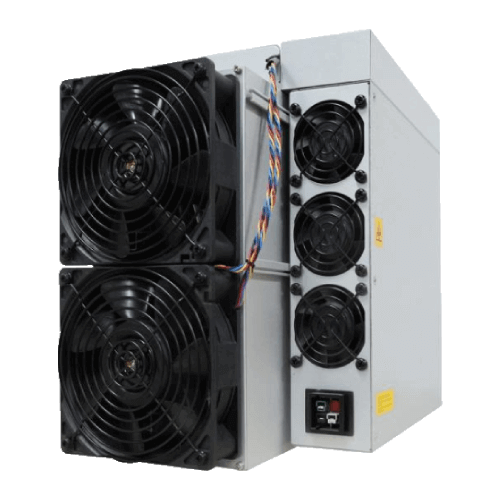
Before any country comparison, here is the arithmetic. A machine's monthly consumption is simply its wattage running 24/7: an Antminer S21 XP (3,645 W) burns about 2,624 kWh a month, while the far leaner Antminer Z15 (1,510 W) uses 1,087 kWh. Multiply by your rate and you have your bill.
| Country (household rate) | S21 XP — 3,645 W | Z15 — 1,510 W |
|---|---|---|
| Hungary — €0.1082/kWh | €284/month | €118/month |
| Malta — €0.1282/kWh | €336/month | €139/month |
| Bulgaria — €0.1355/kWh | €356/month | €147/month |
| Nordics (NO/SE/FI) — ~€0.17/kWh | €446/month | €185/month |
| EU average — €0.2896/kWh | €760/month | €315/month |
| Denmark — €0.3312/kWh | €869/month | €360/month |
| Belgium — €0.3499/kWh | €918/month | €380/month |
| Germany — €0.3869/kWh | €1,015/month | €421/month |
| Ireland — €0.4042/kWh | €1,061/month | €439/month |
Rates come from the Eurostat electricity price statistics published in May 2026, covering the standard 2,500–4,999 kWh household band including all taxes and levies.
Which machines survive where
Monthly cost alone doesn't answer the real question. What matters is whether your rate sits below each machine's break-even electricity price — the point where mining revenue no longer covers power. We calculated those thresholds in our profitability guide: roughly €0.13/kWh for the S21 XP, €0.11 for the S23 Hydro, and about €0.38 for the low-power Z15. Overlay those on the Eurostat map and Europe splits into four zones:
| Zone | Countries | What works at home |
|---|---|---|
| Bitcoin viable | Hungary, Malta | Efficient BTC machines and everything below |
| Borderline | Bulgaria | BTC marginal at best; low-power coins comfortable |
| Low-power only | Nordics, EU average, Denmark, Belgium | Zcash-class machines only — no Bitcoin |
| Nothing works | Germany, Ireland | Even the Z15 is underwater at household rates |
That last row deserves a pause, because nobody publishes it. German and Irish household electricity now exceeds every current ASIC's break-even price. If you mine at home in Frankfurt or Dublin on a standard tariff, you are paying for the privilege — regardless of which machine you buy. And Germany is Europe's largest economy, so this affects a very large share of would-be miners.

The lever most home miners never pull: business rates
Here is the part that changes outcomes. Every figure above is a household rate — but Eurostat tracks a second set entirely. The EU average non-household (business) price sits at €0.1837/kWh, roughly 37% below the household average, because businesses recover VAT and negotiate supply contracts individually. In the first half of 2025 that band ran from about €0.27/kWh in Ireland down to roughly €0.08/kWh in Finland.
Consequently, a miner operating as a registered business rather than a private household frequently moves from the "nothing works" zone into profitability without changing a single cable. If you're running machines seriously in Europe, therefore, the tariff you're on may matter more than the machine you chose. Speak to an accountant about how mining income is treated where you live before restructuring anything — but do check the number.
Taxes are the hidden half of your bill
European electricity is expensive less because of energy and more because of what's layered on top. Taxes and levies alone now account for €0.0837/kWh — 28.9% of the average household bill, up from 27.9% six months earlier. In Denmark that share reaches 48%, in Poland 42%, in Sweden 35%.
This explains something confusing: wholesale prices can fall while your bill still rises. It also explains why purchasing power tells a different story than the euro price does. Adjusted for what people actually earn, Romania, Czechia and Poland carry Europe's heaviest electricity burden — even though none of them appears in the raw top three.
The risk nobody prices in: your rate can move 50% in a year
Mining electricity costs aren't a fixed input, and recent data proves it. Comparing the second half of 2025 against the same period a year earlier, household prices jumped 58.6% in Romania, 34.3% in Austria and 32.7% in Ireland. Meanwhile Cyprus fell 14.7%, France 12.5% and Denmark 11.9%.
A 30% increase turns a comfortably profitable machine into a loss-maker without any change in coin price or difficulty. So when you model a purchase, stress-test it against a materially higher tariff — the same way we advise modelling revenue at half of today's numbers. A machine that only works at your current rate is a bet on your energy supplier, which is not a bet most people intend to make.
How hosting resets the equation
Every zone above assumes you plug the machine in at home. Move it into a datacentre and the geography stops mattering, because hosting runs on industrial contracts near €0.08/kWh — below even Hungary's household rate, from anywhere in Europe. In our facilities a 1,510 W Z15 costs a flat 87 € per month, against €421 on a German household tariff. Over a year that single machine saves roughly €4,000, and the full breakdown sits in our hosting versus home mining comparison.
Who can still mine at home in Europe
Home mining works if:
- You're in a low-tariff country (Hungary, Malta, Bulgaria) or hold a genuinely cheap contract.
- You can access a business rate rather than a household one.
- You produce your own solar, where marginal cost approaches zero.
- You've chosen a low-power machine and your rate sits well under its break-even price.
It doesn't work if:
- You're on a German, Irish, Belgian or Danish household tariff — the numbers are decisive.
- You'd be mining Bitcoin anywhere above €0.13/kWh.
- Your rate has already jumped this year and could jump again.
None of that rules out mining. It rules out mining at your kitchen socket — which is precisely the distinction step one of our guide to choosing a miner is built around.
FAQ: mining electricity costs in Europe
How much electricity does an ASIC miner use per month?
Which European country has the cheapest electricity for mining?
Can you mine Bitcoin profitably in Germany?
Why is European electricity so expensive for miners?
What electricity price do I need to mine profitably?
How much can hosting save on mining electricity costs?
Your country decides the answer — unless you change the location
We've sold and hosted miners across Europe since 2015, so we've run these numbers for buyers in almost every country on the list. Send us your rate and we'll calculate honestly whether mining works where you are. Compare machines in the 2026 buyer's guide, move a machine to industrial rates with our hosting datacentre, or browse miners in stock.
Disclaimer: We are not financial advisors. Electricity prices come from Eurostat's May 2026 release covering the second half of 2025 and represent national averages including taxes and levies; your own tariff may differ significantly. Mining profitability also changes daily with coin prices and network difficulty. Do your own research and never invest money you cannot afford to lose.