Popular
Product Showcase
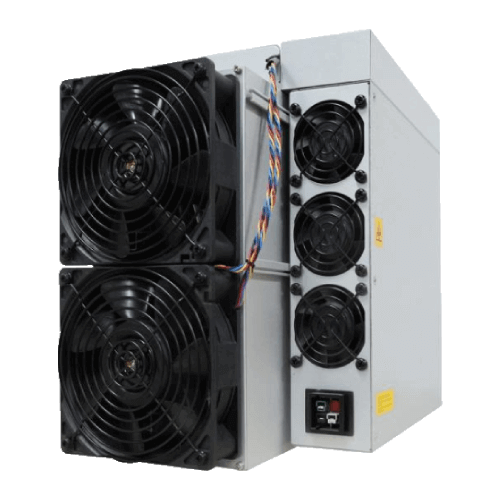


ASIC miner noise measures roughly 75 dB at one metre — a vacuum cleaner that never switches off. Most articles stop there. But for anyone mining in Europe, a second number matters far more: 40 dB, the level the World Health Organization recommends outside bedrooms at night. Germany's Ruhezeit rule of thumb sits near 50 dB, and quiet hours across the EU typically run from 22:00 to 07:00. So you're not trying to make a miner "a bit quieter". You're trying to remove 25 to 35 decibels — and that reframing changes which solutions are worth your money. Here are the real numbers per model, the physics that makes them stubborn, and seven fixes ranked honestly by what works.

How loud is an ASIC miner? Real dB numbers
Measured at one metre, under load, these are the levels you can expect:
| Machine | Noise level | Comparable to |
|---|---|---|
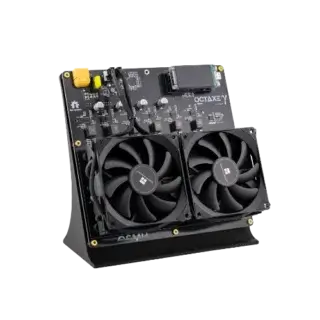
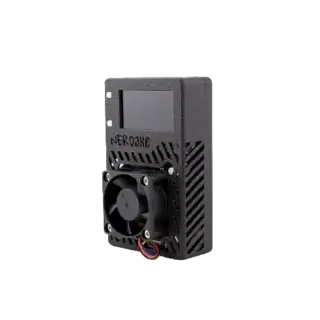
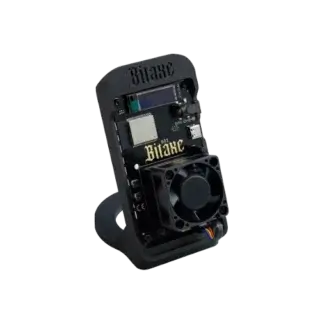
| Fanless USB miner (hobby class) | ~0 dB | Silence |
| Air-cooled ASIC inside a proper enclosure | ~45 dB | Quiet office |
| Hydro-cooled ASIC (liquid loop) | Markedly quieter than air | Depends on radiator placement |
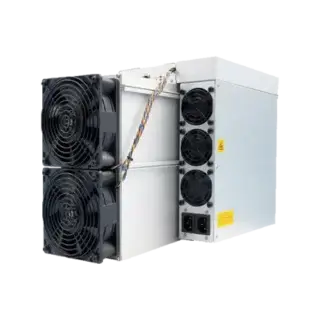
| Standard air-cooled ASIC (S19/S21, M50S, Avalon) | ≈ 75 dB | Vacuum cleaner at 1 m |
| Antminer S9 (older generation) | 76–85 dB | Busy restaurant |
| Any air-cooled unit in hot ambient conditions | up to ~95 dB | Chainsaw at distance |
Why almost every air-cooled miner lands at 75 dB
That clustering isn't a coincidence — it's physics. These machines convert 1,300 to 3,600 watts into heat inside a small metal box, and that heat has to leave. Consequently the fans spin at 6,000–7,000 RPM, and blades cutting air at that speed produce a broad roar. The noise is therefore a feature of the cooling system, not a manufacturing defect. Bitmain designed the S21 for a warehouse in rural Texas, not for your spare bedroom — which is exactly why "find a quiet air-cooled model" is a dead end.
ASIC miner noise also arrives in three separate forms, and each needs a different fix: the fan roar (loudest, hardest to kill), vibration travelling through whatever the machine sits on, and a high-pitched electrical whine from the power stages. If your miner suddenly got louder, incidentally, that's not ageing — that's a failing fan.
What 75 dB actually means (the maths is deceptive)
Decibels are logarithmic, so intuition fails here. Three rules make the numbers readable:
- +10 dB sounds roughly twice as loud to the human ear. Dropping from 75 to 65 dB therefore halves the perceived noise — a big win, even though the number moved only ten points.
- +3 dB doubles the sound energy, which is why two miners side by side are noticeably worse than one.
- Doubling the distance subtracts about 6 dB. Ten times the distance subtracts 20.
That last rule sounds like free noise reduction — until you run it against a European property:
| Distance from miner | Noise level | Verdict at night |
|---|---|---|
| 1 m | 75 dB | Unbearable |
| 4 m (next room) | 63 dB | Still above daytime limits |
| 10 m (garden shed) | 55 dB | Above Ruhezeit guidance |
| 20 m (far corner of a plot) | 49 dB | Borderline, neighbours may still hear it |
| 40 m+ | 43 dB | Approaching the WHO night target |
In other words, to reach the WHO night noise guideline through distance alone, you'd need roughly 40–50 metres of open ground. Rural properties have that. European suburbs, terraced houses and flats do not — and that single fact explains why so many EU home mining setups end within a month.
7 ways to reduce ASIC miner noise, ranked honestly
What genuinely works
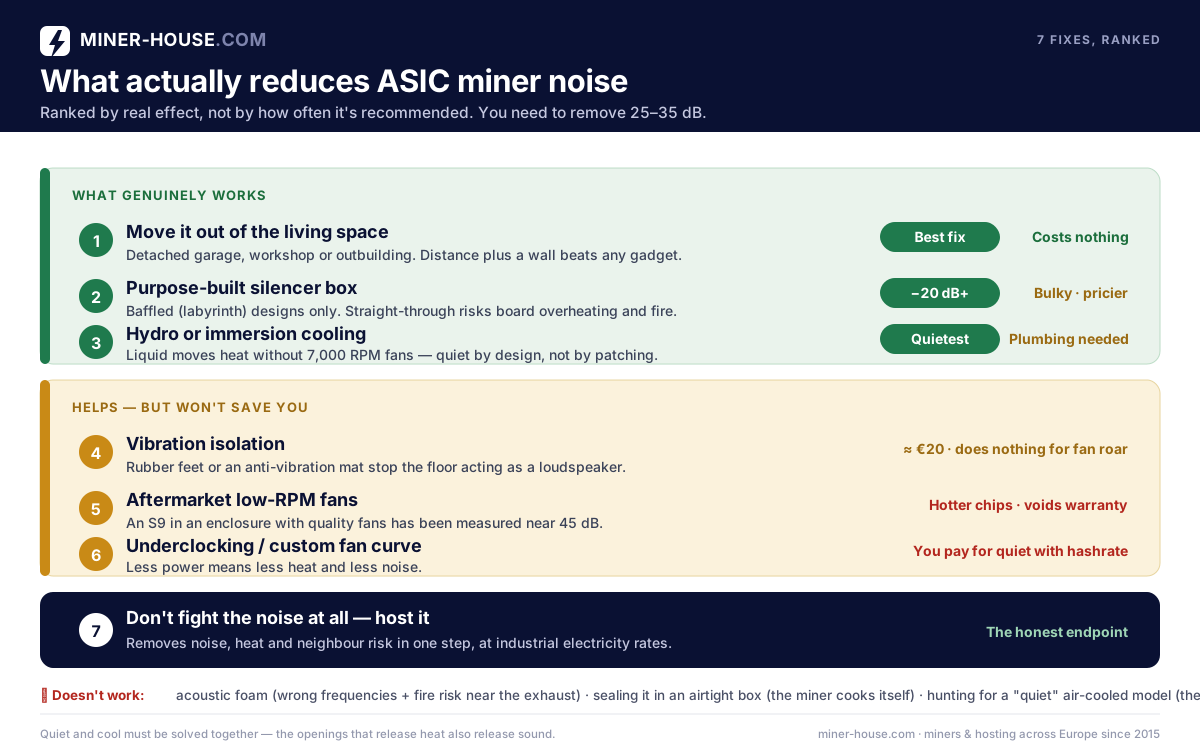
- Move it out of the living space. A detached garage, workshop or outbuilding costs nothing and beats every gadget, because distance plus a wall does more than foam ever will. This remains the single most effective home fix.
- A purpose-built silencer box. Properly baffled enclosures deliver a real 20 dB or more. However, treat them seriously: straight-through designs can overheat the control board and raise fire-safety concerns, while labyrinth designs work best but cost more and take up space.
- Hydro or immersion cooling. Liquid moves heat without high-RPM fans, so hydro machines such as the Antminer S23 Hydro run far quieter than their air-cooled equivalents. The trade-off is plumbing, a radiator that needs somewhere to dump heat, and a higher entry cost.
What helps, but won't save you
- Vibration isolation. Rubber feet or an anti-vibration mat cost about €20 and remove the structural hum that turns your floor into a loudspeaker. Cheap and worth doing — yet it doesn't touch the fan roar.
- Aftermarket fans. Quality low-RPM fans genuinely lower the tone, and an S9 in an enclosure with them has been measured near 45 dB. Nevertheless, you risk higher chip temperatures, and the swap usually voids your warranty.
- Underclocking or a custom fan curve. Running the machine below stock power reduces both heat and noise — honestly, though, you're paying for quiet with hashrate, so calculate that cost first.
The honest seventh option
- Don't fight the noise at all. Put the machine in a datacentre. Our hosting vs home mining comparison shows this usually costs less than the electricity you'd save anyway — and it removes noise, heat and neighbour risk in one step.
Three myths worth deleting
- "Acoustic foam will fix it." Foam absorbs high frequencies, while fan roar is broadband and largely low-mid. Worse, foam near a hot exhaust is a fire risk.
- "I'll seal it in an airtight box." Never do this. The same openings that release heat release sound, so a sealed miner cooks itself. Quiet and cool must be solved together.
- "Some models are quiet." Not at full power on air cooling. Every full-size air-cooled ASIC lands near 75 dB, because they all face the same heat-removal problem.
Who can mine at home quietly — and who can't
Home mining works acoustically if:
- You have a detached garage, workshop or outbuilding — ideally 20+ metres from any bedroom, yours or a neighbour's.
- You'll invest in a proper baffled enclosure, or you're buying hydro-cooled hardware.
- Your neighbours are distant, or you've spoken to them first. Transparency prevents most complaints.
It doesn't work if:
- You live in a flat, a terraced house or any shared building. No enclosure removes 35 dB reliably.
- The only available space adjoins a bedroom or a neighbour's wall.
- You'd be running several machines, where every doubling adds another 3 dB.
If you land in the second group, the machine isn't the problem — the location is. That's a solvable problem, and it's worth settling before you buy, which is why placement is step two in our guide to choosing an ASIC miner.
FAQ: ASIC miner noise
How loud is an ASIC miner in decibels?
Can I run an ASIC miner in an apartment?
How can I reduce ASIC miner noise?
Are there genuinely quiet ASIC miners?
Will my neighbours hear my miner?
Does putting a miner in a box damage it?
Skip the noise problem entirely
We've sold miners across Europe since 2015, so we know how many home setups end because of sound rather than economics. If your home can't absorb 75 dB, run the machine in our hosting datacentre instead — no noise, no heat, industrial electricity rates. Prefer to keep it close? Compare quieter hydro models in the 2026 buyer's guide, check the numbers in our profitability guide, or browse miners in stock and tell us where you plan to put it. We'll say honestly whether it will work.
Disclaimer: Noise figures are manufacturer and field measurements at one metre under load; actual levels vary with ambient temperature, fan wear and room acoustics. Local noise regulations differ by country and municipality — always check the rules that apply where you live before installing a miner at home.