Category
Popular
-
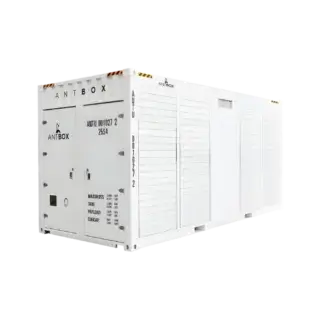
Bitmain ANTBOX Cryptocurrency Mining Container 10 ft / 20 ft / 40 ft
10 000€
-
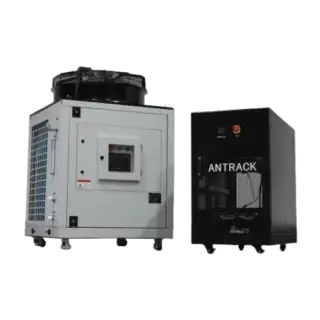
Bitmain ANTRACK V2 24 kW (Hydro Mining System) for ASIC Miners
Price on Request
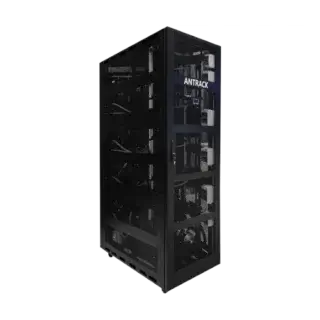
-
Bitmain ANTRACK V1 24 kW (Hydro Mining Rack) for ASIC Miners
2 950€
-
ASIC Miner Conversion from Air Cooling to Hydro Cooling
150€
-
Bitmain APW17 PSU 12–15V EMC, 3600W for Antminer
310€
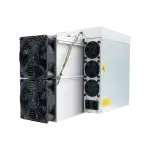
A standard Antminer S21 (200 TH/s) mines about 0.0326 BTC a year, or 0.0000894 BTC a day, at the network difficulty of 140.578 T on 26 October 2026. That assumes difficulty stays flat for 12 months, counts the block subsidy of 3.125 BTC only and is calculated before pool fees. At €71,705 per BTC it is worth about €6.41 a day.
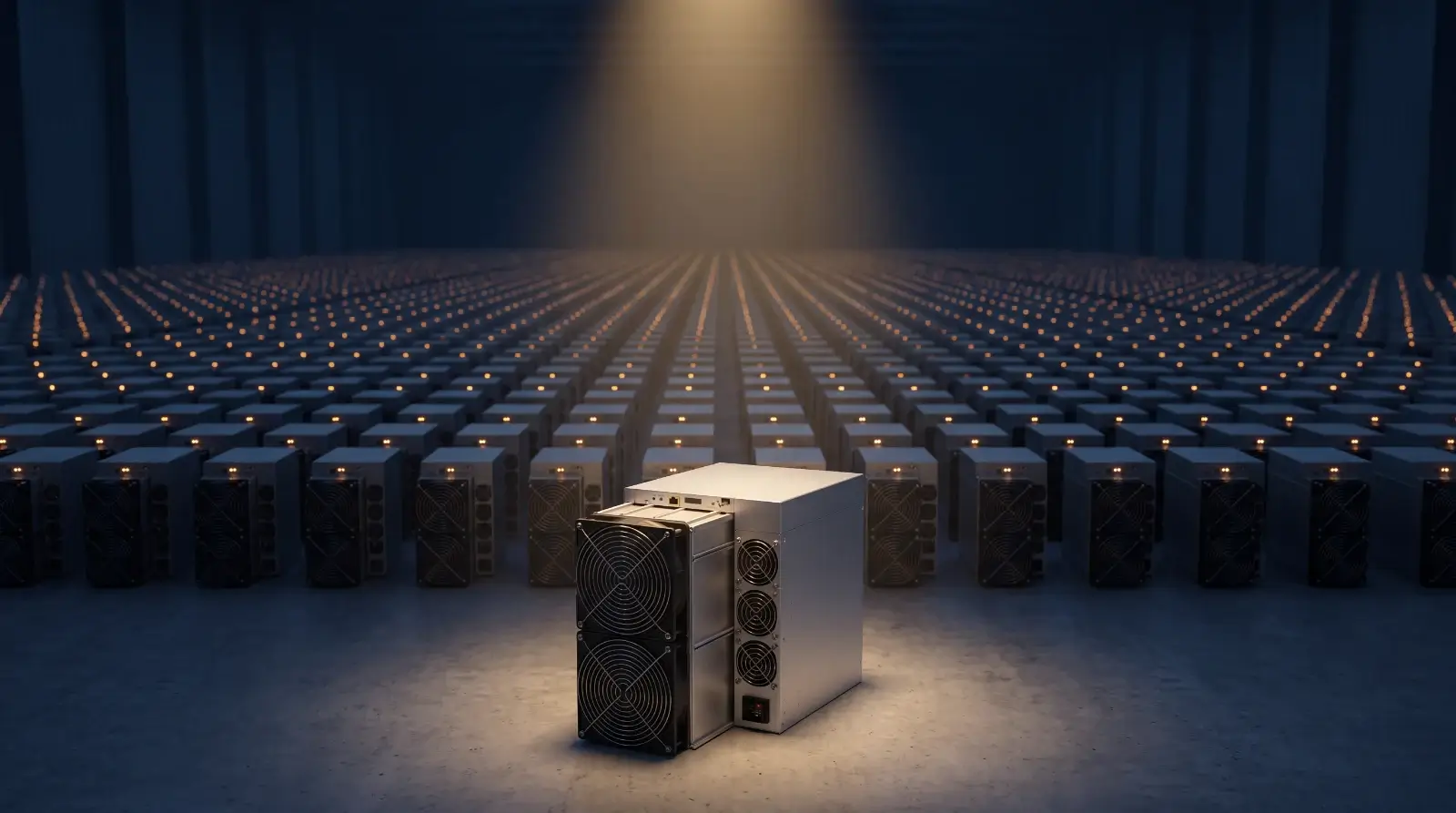
Anyone looking at professional crypto mining today will meet the Bitmain Antminer S21 series. This generation was among the most efficient machines at launch in 2024; today the standard S21 is rated at 17.75 J/TH, against 13.5 J/TH for the S21 XP and 11 J/TH for the S23. How much Bitcoin one S21 mines in a year depends on several factors, mining difficulty most of all.
Updated: 26 October 2026
How is the yield of an Antminer S21 calculated?
Every ASIC miner contributes to the total computing power of the Bitcoin network (the hashrate). The higher the output of your machine relative to the whole network, the bigger your share of the block rewards.
BTC per day = 86,400 × 3.125 × 10^12 × (your TH/s) ÷ (difficulty × 2^32). With difficulty 140.578 T this gives 4.4718e-07 BTC per TH/s per day. In network terms: BTC per day = (your TH/s ÷ network TH/s) × 144 blocks × 3.125 BTC.
The standard S21 delivers 200 TH/s at 3,550 W (17.75 J/TH). Its gross income is about 7.18 USD (€6.41) a day, and about 2.07 USD a day remains after electricity at 0.06 USD/kWh. At a constant BTC price that is about 2,620 USD gross over a year. In Bitcoin it looks like this:
| Machine | Hashrate | Power | BTC per day | BTC per month | BTC per year | Revenue per day |
|---|---|---|---|---|---|---|
| Antminer S21 (200 TH/s) | 200 TH/s | 3,550 W | 0.0000894 | 0.0027 | 0.0326 | €6.41 |
What is difficulty?
Difficulty measures how hard it is to find a new Bitcoin block. Bitcoin is designed to produce one about every 10 minutes: when more miners join, difficulty rises, and when some leave, it falls. The yield of a single device therefore changes over time.
At the start of 2026 difficulty was reported at about 141.67 T. It then fell by more than 3%, with forecasts of a further drop to about 126.84 T, after winter storms in the USA shut down part of the mining farms and network hashrate fell below 900 EH/s (reported). S21 owners got a larger share of the rewards right away.
How much Bitcoin can an S21 mine per year?
A difficulty of 140.578 T implies a network hashrate of about 1,006 EH/s, so a 200 TH/s S21 holds about 0.0000199% of it. About 144 blocks are found per day at 3.125 BTC each, so about 450 BTC are distributed daily. One S21 therefore mines about 0.0027 BTC a month and 0.0326 BTC a year. A higher difficulty cuts the yield and a lower one raises it (value per year at €71,705 per BTC):
| Difficulty change | Difficulty | BTC per day | BTC per month | BTC per year | Value per year |
|---|---|---|---|---|---|
| −10% | 126.520 T | 0.0000994 | 0.0030 | 0.0363 | €2,601 |
| 0 (today) | 140.578 T | 0.0000894 | 0.0027 | 0.0326 | €2,341 |
| +10% | 154.636 T | 0.0000813 | 0.0025 | 0.0297 | €2,128 |
| +20% | 168.694 T | 0.0000745 | 0.0023 | 0.0272 | €1,951 |
| +30% | 182.751 T | 0.0000688 | 0.0021 | 0.0251 | €1,801 |
Because difficulty keeps moving, here is year 1 month by month. Month 1 uses today's difficulty, and from month 2 it grows by the stated percentage every month. The 0% column is the flat figure of 0.0326 BTC.
| Month | BTC at 0% growth | BTC at 3% a month | BTC at 5% a month |
|---|---|---|---|
| 1 | 0.00272 | 0.00272 | 0.00272 |
| 2 | 0.00272 | 0.00264 | 0.00259 |
| 3 | 0.00272 | 0.00256 | 0.00247 |
| 4 | 0.00272 | 0.00249 | 0.00235 |
| 5 | 0.00272 | 0.00242 | 0.00224 |
| 6 | 0.00272 | 0.00235 | 0.00213 |
| 7 | 0.00272 | 0.00228 | 0.00203 |
| 8 | 0.00272 | 0.00221 | 0.00193 |
| 9 | 0.00272 | 0.00215 | 0.00184 |
| 10 | 0.00272 | 0.00208 | 0.00175 |
| 11 | 0.00272 | 0.00202 | 0.00167 |
| 12 | 0.00272 | 0.00197 | 0.00159 |
| Year 1 total | 0.0326 | 0.0279 | 0.0253 |
| Value of the year at €71,705 | €2,341 | €2,000 | €1,815 |
Why mining calculators give different results
Two calculators rarely agree to the last digit. One takes difficulty from the latest adjustment, another averages the past 30 days, and a third works from the daily hashrate estimate. Transaction fees averaged about 0.0181 BTC per block over 30 days, around +0.58%, and only some tools add them. The pool fee is subtracted by some and ignored by others, and every tool picks its own BTC price.
Why does difficulty keep rising?
New ASIC devices keep joining the network, each generation more powerful and efficient than the last. In 2020 the top machines delivered around 100 TH/s; S21-series machines deliver 200 TH/s and more, at much lower energy use per terahash. Total hashrate has therefore grown over the long term, and difficulty with it. Historically, over a few years the yield of a single miner can end up tens of percent below its launch level (reported). Over the last 12 months, though, difficulty went down 9.87%, from 155.973 T on 29 October 2025 to 140.578 T.
The role of the Bitcoin price
The price of Bitcoin weighs as much as difficulty. At the start of 2026 older devices such as the Antminer S19 XP+ Hydro or the WhatsMiner M60S needed a BTC price above roughly $86,000 to stay in the black (reported). S21-series machines held up better: their reported break-even was roughly $69,000 to $74,000 per Bitcoin, with no assumptions stated.
Energy efficiency
Energy efficiency now counts as much as hashrate. S21 models reach about 16 to 19.5 J/TH depending on configuration (reported). The standard 200 TH/s S21 is rated at 17.75 J/TH, and some versions run at about 16.25 J/TH in an economy mode (reported). Low energy use lets miners get through periods when Bitcoin falls or difficulty rises sharply.
Is the Antminer S21 worth it?
If difficulty and the BTC price stayed unchanged for a whole year, one S21 (200 TH/s) would mine about 0.033 BTC. Difficulty adjusts every two weeks to the hashrate of the network, so the current yield alone tells you little. Also check:
- the energy efficiency of your hardware (J/TH),
- the price of electricity (€/kWh),
- the long-term trend of the whole Bitcoin network.
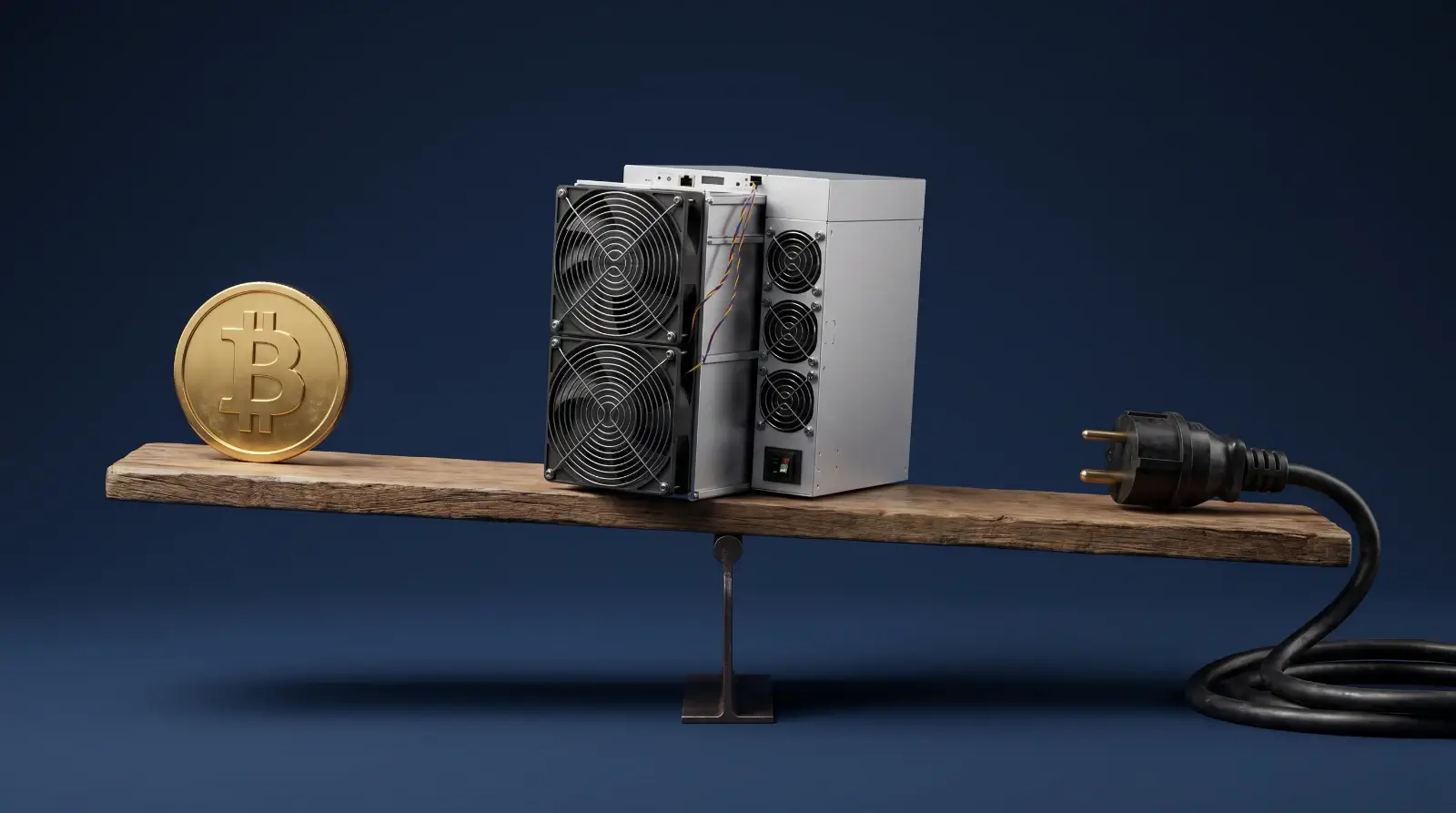
A 200 TH/s S21 uses 85.2 kWh a day and earns €6.41 at today's inputs, so it breaks even at about €0.075/kWh. On our hosting from €0.09/kWh (Norway / Finland) it would lose about €1.25 a day. With its low consumption, the S21 is a reasonable choice for long-term mining where electricity costs less than break-even.
Frequently asked questions
How does the yield change if difficulty rises?
Does an Antminer S21 earn money at EU electricity prices?
Do transaction fees change the numbers?
Want to check an S21 against your electricity price?
We sell the Antminer S21 (151 TH/s) at €970, and more efficient machines such as the S21 XP+ Hydro and the S23. Compare them in the profitability comparison or see our hosting from €0.09/kWh (Norway / Finland).
Figures valid as of 26 October 2026: difficulty 140.578 T (mempool.space), subsidy 3.125 BTC, 1 BTC = €71,705 / $80,270 (CoinGecko), specifications from asicminervalue and Bitmain. Yields count the subsidy only, before transaction fees, pool fees and depreciation; a month is 365/12 days. Reported figures are third-party, not Miner-House data. Mining is not guaranteed to be profitable and this text is not investment advice.
Written by Denis
Best offers
Join Risk Free
30 days refund
100% Safe
Secure Shopping
24x7 Support
Online 24 hours
Best Offers
Grab Now
Free Shipping
On all order over
Know Us
- Top SK-CZ vendor since 2015, now expanding across EU
- Buy directly from our EU wholesalers
- 29 wholesalers = always lowest ASIC prices
- Up to 2-year warranty on Bitmain miners
- Personal support: miner choice, profit calculation
- Free miner setup