Popular
Product Showcase


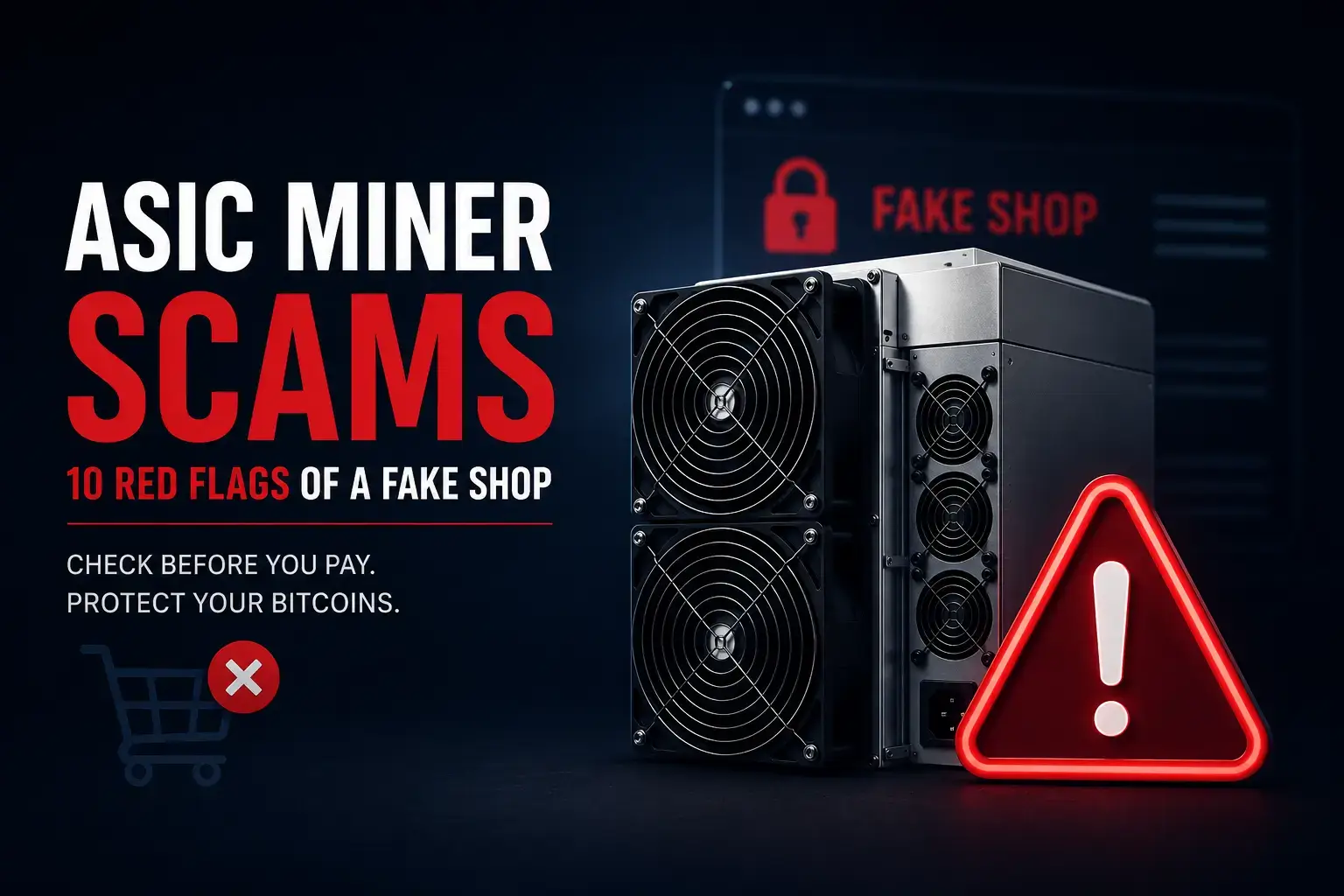
Fake mining operations have stolen staggering sums — HashFlare alone sold $577 million in contracts backed by fake dashboards, and its founders were sentenced in 2025. Yet the most common ASIC miner scam is far simpler: a polished e-shop that takes your prepayment for a machine that never existed. We know this pattern intimately, because we were the victims first: nine separate frauds hit us directly while we built our supplier network. Since 2015 we’ve tested 29 suppliers with our own money and documented over 60 fraudulent miner e-shops — one of our customers even took a scam operator to court and won. Because a typical ASIC costs €3,000–13,000, one wrong click is an expensive lesson. So here is the complete checklist: ten red flags of a fake miner shop, and the five checks to run before you send anyone a cent.
Why miner shops are a scammer’s dream
Three features make this market uniquely attractive to fraud. First, the ticket is high — a single “sale” nets thousands of euros. Second, full prepayment is the industry norm, so buyers are trained to pay strangers upfront. Third, scammers push payment in cryptocurrency, which is irreversible: once sent, there is no chargeback, no bank, no recourse. Add buyers who can’t physically inspect stock in a warehouse on another continent, and you have the perfect hunting ground.
The 10 red flags of an ASIC miner scam
- Prices 40–70% below the market. The number one flag on our list. A miner that costs €7,000 from the manufacturer does not sell new for €3,600. The “discount” isn’t a bargain — it’s the bait.
- A domain registered weeks ago. Fraud shops burn their reputation fast and relaunch under a new name. A shop claiming “years of experience” on a two-month-old domain is lying by definition.
- Crypto-only prepayment. If the only payment options are BTC, USDT or a bank transfer to a personal account — and always 100% upfront — you carry all the risk and the seller carries none.
- Typosquatted or copycat branding. We’ve documented shops like biltmain.com (note the L), bitmain.asia and bitmain.click impersonating Bitmain. Manufacturers sell through official channels — check the real domain letter by letter.
- The same website in different colors. Scam groups run template farms: identical layout, identical product photos, identical “3+1 free” offers — only the logo and color change. If a shop looks strangely familiar, it probably is.
- No company behind the website. No legal entity, no registration number, no VAT ID, no physical address — or an address that Google Street View shows as a random apartment block.
- Fake or unverifiable team. Scam sites routinely use stolen LinkedIn photos or invented staff. If the “CEO” appears nowhere else on the internet, he doesn’t exist.
- Too-good guarantees. “Guaranteed daily profit,” “ROI in 3 months, guaranteed” — mining returns swing with coin prices and difficulty, so nobody honest guarantees them.
- Reviews that only live on their own site. Testimonials on the shop’s own pages are worthless. Real reviews live where the seller can’t delete them — Google, Facebook, Trustpilot, mining forums.
- Pressure and urgency. Countdown timers, “last 3 units,” pushy Telegram/WhatsApp sellers. Legitimate suppliers restock; scammers need you to pay before you think.
The 5-step check before you pay anyone
Red flags tell you when to run. These five checks tell you when it’s reasonably safe to proceed — run them all, because scammers pass one or two easily:

- Check the domain age. Run the shop’s domain through the official ICANN WHOIS lookup. Registered in the last year? Treat every other signal with double suspicion.
- Verify the company in a state registry. A real seller publishes its legal name and ID — for example, ours is listed on our contact page and verifiable in the Slovak business register. No registration number = no company = no recourse.
- Cross-check reviews off-site. Search “shop name + scam”, check Google and Facebook reviews (sellers can’t delete those), and search mining forums like VoskCoinTalk or Reddit, where victims post warnings quickly.
- Test the communication. Call the phone number. Ask a technical question by email. A real supplier answers concretely about stock, shipping and warranty; a scammer dodges, rushes you to pay, or replies only on Telegram.
- Compare the price to the manufacturer’s. Check the model’s price at Bitmain/IceRiver directly. Anything dramatically below it fails the most basic sanity test — see flag #1.
The payment rule that beats every scam
One rule protects you more than all ten flags combined: never pay 100% upfront in crypto to a shop you haven’t verified. Prefer payment methods with recourse — card, PayPal, invoice with a registered EU company. Better still, pay on delivery when possible. This is exactly why we introduced payment upon receipt: the miner arrives at our warehouse, and you pay when the machine is in your hands — at pickup or to the courier. To our knowledge, no other miner seller in the EU offers this, precisely because a scammer never could: cash on delivery is the one model where fraud is impossible by design.
What to do if you’ve already been scammed
Act fast, but keep expectations realistic. If you paid by card or bank transfer, contact your bank immediately about a chargeback or recall — hours matter. Report the shop to the police and to your national consumer protection authority; cross-border EU cases can go through the European Consumer Centre. Collect everything: order confirmations, chat logs, wallet addresses. Recovery from crypto payments is rare, but not hopeless in the EU — one of our customers successfully sued a Spanish operator running several fake miner e-shops and won in court. Finally, report the shop publicly (forums, reviews, and to us) so the next buyer finds the warning before paying.
Our fraud list: 60+ documented fake shops
Since 2015 we’ve ordered from suppliers with our own money, kept records, and published the results. The outcome is a continuously updated list of 60+ fraudulent miner e-shops and our verified supplier comparison — including the patterns they share and the specific domains to avoid. Bookmark it and check any shop against it before you pay. And remember our own rule of humility: even a careful check doesn’t guarantee safety, because the best fraudsters don’t look like fraudsters. That’s why the payment method matters more than anything else.
FAQ: ASIC miner scams, answered straight
How do I know if a miner shop is legit?
What is the most common ASIC miner scam?
Why are fake miner shops so cheap?
Can I get my money back after a miner scam?
Is it safe to buy an ASIC miner online at all?
Are cloud mining sites scams too?
Buy from a shop where scams are impossible by design
We’ve sold miners since 2015 — with a registered EU company, public track record, and the option to pay only when the machine is in your hands. Check any seller against our fraud list and supplier comparison, pick a machine in the 2026 buyer’s guide, or browse current miners — and if a deal elsewhere looks too good, message us before you pay. We’ll tell you honestly.
Disclaimer: This article is for information only and is not legal or financial advice. Scam patterns evolve; always verify a seller independently before paying, and never invest money you cannot afford to lose.