Currently Most Profitable Miner: Antminer Z15 Pro (860 KSol/s) (Zcash) | Buy Miners →

Part of MM-PRO GROUP · Slovakia's largest ASIC dealer since 2015 · Also visit our Slovak shop: ako-tazit-kryptomeny.sk

Cloud Mining vs Buying an ASIC: Honest Maths

Cloud mining illustration — coins falling from a cloud into a jar while a tap drains most of them away as fees

Cloud Mining vs Buying an ASIC: Where the Money Actually Goes

Cloud mining promises the one thing every would-be miner wants: Bitcoin income with no noise, no electricity bill and no hardware to manage. Pay once, receive coins daily. The pitch is genuinely attractive, and a few large, regulated operators do run real facilities. But look at what a typical contract returns and the picture changes quickly: in a published industry comparison, a $500 contract mined roughly $350–450 of Bitcoin over twelve months, then lost $200–300 of that to maintenance and electricity fees — handing back about $50–250 of the original $500. This guide breaks down where that money goes, why most contracts end in a loss even when the provider is honest, how to recognise the many that aren't, and when owning a machine is the better route.

What cloud mining actually is

With cloud mining you buy a contract for a slice of someone else's hashrate — say, 10 TH/s for twelve months. The provider runs the machines, pays the power, and credits you a share of what they mine, minus a daily maintenance or electricity fee. Crucially, you never own any hardware. You own a promise, and its value depends entirely on the provider keeping it.

That makes it fundamentally different from hosted mining, where you buy a physical machine and pay a datacentre to run it. With hosting the machine carries your name, has a serial number, can be shipped back to you, and can be resold. With cloud mining, when the contract ends, you're left with whatever coins were credited — and nothing else.

Where a cloud mining contract's money goes

Here's the illustrative $500 contract laid out step by step:

StepAmount
You pay upfront$500
Bitcoin mined for you over 12 months$350–450
Maintenance and electricity fees deducted−$200–300
Net returned to you$50–250
Result on your $500−$250 to −$450

Three structural reasons make that outcome the norm rather than bad luck:

  • The hashrate is marked up. The provider buys hardware at wholesale, then sells you its output at a price that has to cover their facility, staff and margin. You're paying retail for something they acquired at cost.
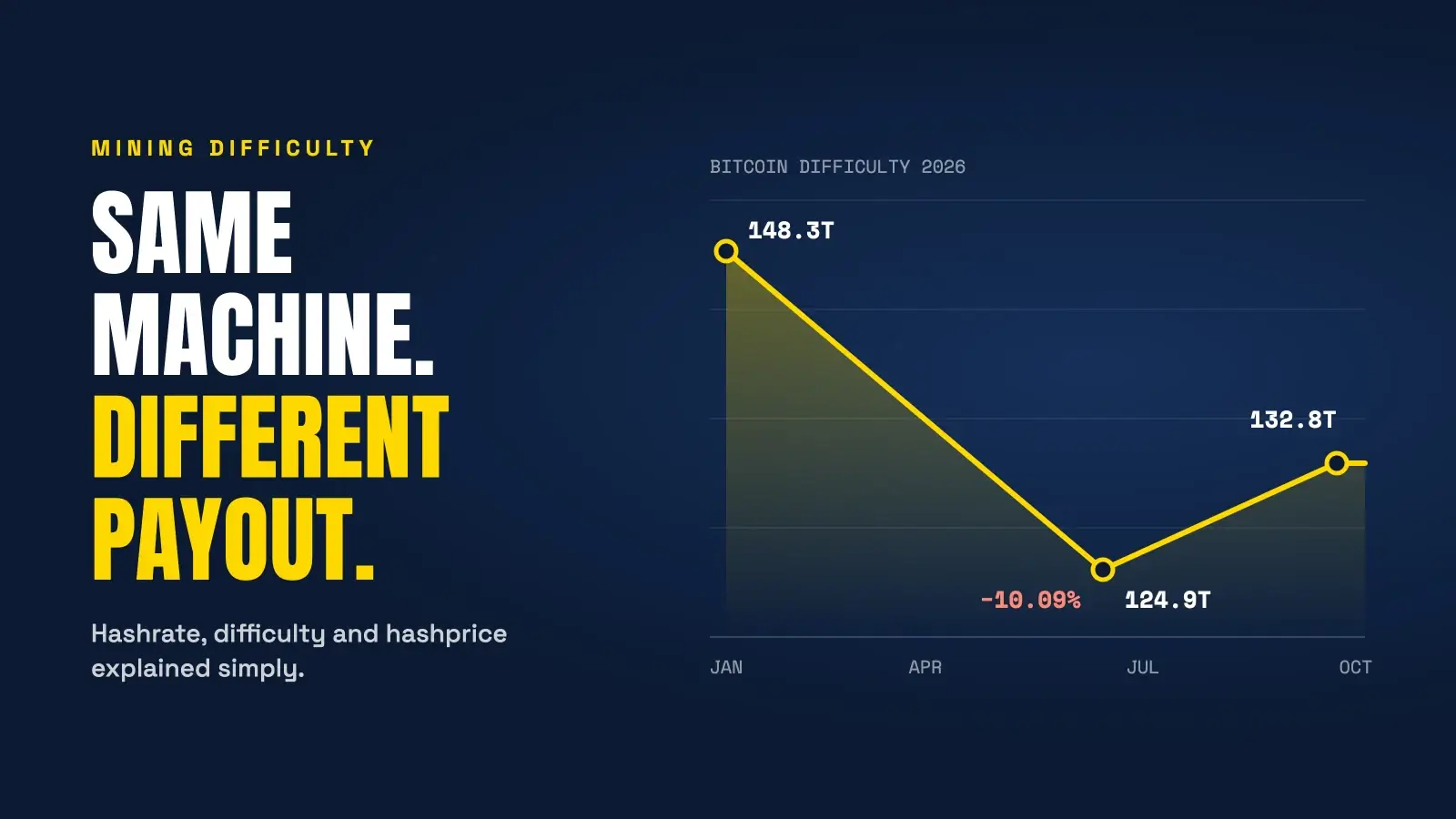
  • Fees are fixed, revenue isn't. Maintenance charges stay constant while mining revenue shrinks as difficulty rises — the dynamic our difficulty explainer walks through. The same comparison found that 70–80% of contracts bought in bull markets become unprofitable within 8–14 months.
  • You can't switch it off. An owned machine running at a loss can be paused. A contract usually keeps deducting fees until its term ends or the provider decides it has become uneconomic — on their terms, not yours.

The honest summary: a legitimate contract is usually a bet that the coin price rises faster than fees and difficulty erode your return. Sometimes it does. Most of the time, the house wins by design.

The bigger problem: most cloud mining isn't real

Everything above assumes an honest provider. Cloud mining is also the single largest category of crypto mining fraud, with more than $3.5 billion attributed to fake operations. The pattern is simple — there's nothing to inspect, so a dashboard showing invented earnings is indistinguishable from a real one until withdrawals stop.

SchemeApproximate sizeWhat was really happening
GainBitcoin$2.1 billionPromised 10% monthly; no mining facilities found
BitClub Network$722 millionMLM structure with no real mining behind it
HashFlare$577 millionFake dashboards; under 1% of the hashpower it sold
Mining Max$250 millionOnly around $70 million reached actual mining

HashFlare is the instructive case because it looked legitimate for years and paid early customers. The US Department of Justice later established that it held less than one percent of the computing power it claimed, settling early withdrawals with coins bought on the open market. Even platforms without criminal intent have vanished: Genesis Mining stopped taking customers in 2020, StormGain closed in 2025 under regulatory pressure, and Eobot users lost access to their funds.

How to spot a fake cloud mining platform

  • Guaranteed returns. Real mining income moves with price and difficulty every day. Any fixed promise — especially 1% daily or 100%+ yearly — is invented.
  • Referral tiers. Bonuses for recruiting friends are the signature of a Ponzi structure.
  • A dashboard that only goes up. Real earnings fall when difficulty rises. A smooth upward line means nobody is mining.
  • Withdrawal "fees" or "taxes". Being asked to pay before you can withdraw is the endgame of most schemes.
  • No verifiable company. Anonymous team, stock photos, a domain registered within the last year, no audited filings.
  • Urgency. "Limited capacity", countdown timers, "price rises tomorrow".

Our scam checklist for miner shops covers the hardware-side equivalents. For cloud contracts, the only operators that publish audited financials are publicly listed ones — BitDeer and BitFuFu, both on NASDAQ with SEC filings. That makes them verifiable; it doesn't make their contracts profitable.

Cloud mining vs owning a machine

Cloud miningOwning an ASIC (home or hosted)
What you ownA contractPhysical hardware with a serial number
Entry costFrom ~$26From a few hundred to several thousand euros
Can you switch it off?Usually notYes, any time
Choice of coin and poolProvider decidesYou decide, payouts go to your wallet
Resale value at the endNoneYes
Fraud riskHigh — nothing to inspectLow with a verified seller
Noise, heat, wiringNoneAt home yes; hosted none

The column that matters most is the last row. Cloud mining's real selling point is convenience — no noise, no electricity, no setup. Hosting delivers exactly that convenience while you keep ownership of the machine, control of the pool and wallet, and the ability to switch off when mining stops paying. The economics still have to work, of course: as our profitability guide shows, that depends on the machine's efficiency and the electricity rate, and some machines — the Antminer Z15 Pro on current Zcash prices, for example — clear it far more comfortably than others.

Who cloud mining might suit — and who it doesn't

It can make sense if:

  • You want to spend a small amount purely to learn how mining payouts behave.
  • You use a publicly listed provider, read the fee terms in full, and treat it as a price bet rather than income.
  • You accept that the most likely outcome is getting back less than you paid.

It doesn't if:

  • You're looking for steady income. Fixed fees against shrinking revenue rule that out.
  • The platform guarantees returns, pays for referrals, or can't show audited financials.
  • You'd be better served owning hardware in a datacentre — which, if convenience is the reason you're looking at cloud mining, you probably would.

FAQ: cloud mining

Is cloud mining profitable in 2026?
Usually not. In a published industry comparison, a $500 contract mined about $350–450 of Bitcoin over 12 months, then lost $200–300 to maintenance fees, returning roughly $50–250. Contracts can come out ahead if the coin price rises sharply, but fees and rising difficulty work against you throughout.
Is cloud mining a scam?
Not always, but it's the largest category of mining fraud, with over $3.5 billion attributed to fake operations including GainBitcoin, BitClub Network and HashFlare. Because there's no hardware to inspect, a fake dashboard looks identical to a real one until withdrawals stop. Treat any guaranteed return as a red flag.
What is the difference between cloud mining and hosted mining?
With hosted mining you own a physical machine that a datacentre runs for you — it has a serial number, mines to your own pool and wallet, can be switched off and can be resold. With cloud mining you own only a contract for someone else's hashrate, and nothing remains when it ends.
Which cloud mining platforms are legitimate?
The only providers with audited financials are publicly listed ones such as BitDeer and BitFuFu, both on NASDAQ with SEC filings. Being verifiable reduces fraud risk, but it doesn't make their contracts profitable — always read the maintenance fee terms and termination conditions.
Why do cloud mining contracts lose money?
Three reasons: the provider sells hashrate at a markup over what it cost them, maintenance fees stay fixed while mining revenue falls as difficulty rises, and you usually can't pause the contract when it becomes unprofitable. The structure favours the provider by design.
Is it better to buy a miner than a cloud mining contract?
For most people, yes — provided the machine is efficient enough for the electricity rate it will run on. Owning gives you resale value, control over when to switch off, and payouts straight to your wallet. If the appeal of cloud mining is avoiding noise and setup, hosting gives you that while you keep the hardware.

Get the convenience of cloud mining — and keep the machine

We've sold and hosted mining hardware across Europe since 2015. With our hosting datacentre you own a real, serial-numbered machine, mine to your own wallet and pool, and switch off whenever the numbers stop working — no noise, no wiring, no promises you can't verify. Browse current miners or send us any cloud mining offer you're considering, and we'll tell you honestly what it's likely to return.

Disclaimer: We are not financial advisors. The $500 contract is an illustration drawn from a published industry comparison, not the terms of any specific platform; actual contracts vary widely. Mining returns depend on coin prices and network difficulty, which change daily. Never invest money you cannot afford to lose.

Your Cart

Your Cart

Your Cart is Empty

Start Shopping
Continue Shopping
Payment Details
Sub Total 0€