Category
Popular
Product Showcase
Used ASIC Miners: When Buying Second-Hand Actually Makes Sense
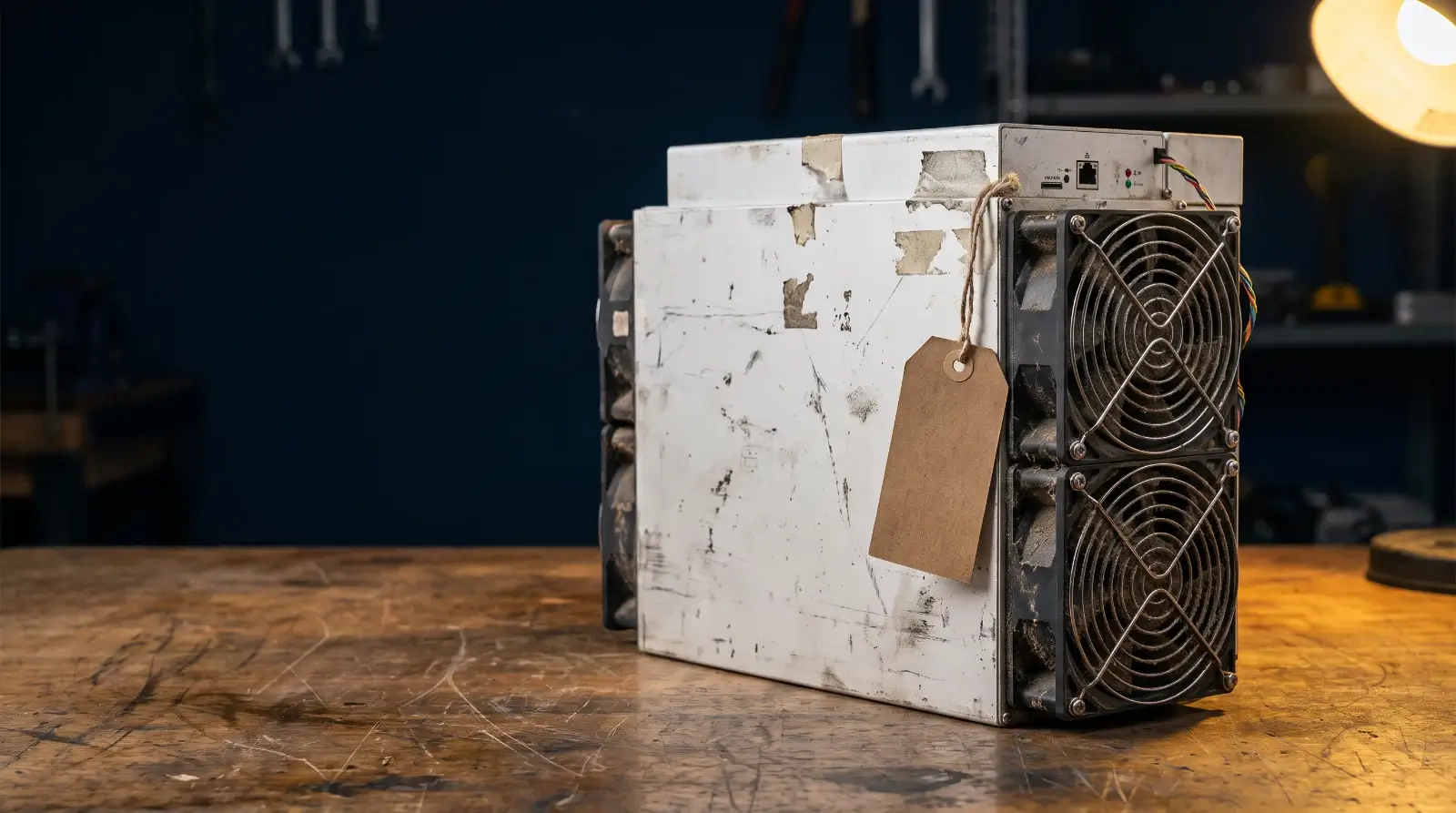
A used ASIC miner typically sells for 30–70% less than it cost new, and in 2026 the second-hand market is full of them — farms liquidating, home miners giving up, older generations being swapped out. Every buying guide frames the decision around that discount. We think that's the wrong frame for European buyers, and here's the number that shows why: at a typical hosting rate of €0.08/kWh, an Antminer S19j Pro loses money even if someone gives it to you for free. The purchase price was never the problem — the electricity bill was. This guide explains how to tell a genuine second-hand bargain from expensive scrap, what to check before paying, and when used hardware really is the smarter buy. And yes, we sell new machines; we'll still tell you when used wins.
The free miner test
Before comparing prices, ask one question: would this machine make money if it cost nothing? If the answer is no, no discount can save it, because the loss happens every day in electricity rather than once at checkout.
Here's that test for two machines at early-September network conditions:
| Machine | Efficiency | Revenue per day | Break-even electricity |
|---|---|---|---|
| Antminer S19j Pro (older generation) | ~29.5 J/TH | ~$4.10 | ≈ €0.05/kWh |
| Antminer S21 XP (current generation) | ~13.5 J/TH | ~$10.70 | ≈ €0.11/kWh |
The S19j Pro needs electricity below roughly €0.05/kWh just to cover its power. That's below every European household tariff in our country-by-country breakdown and below most hosting contracts too. So a cheap S19 isn't cheap — it's a machine that charges you to run it. The S21 XP, by contrast, clears hosting rates comfortably. Run any model you're considering through WhatToMine at your own €/kWh before you look at the asking price.
Why older machines fail the test first
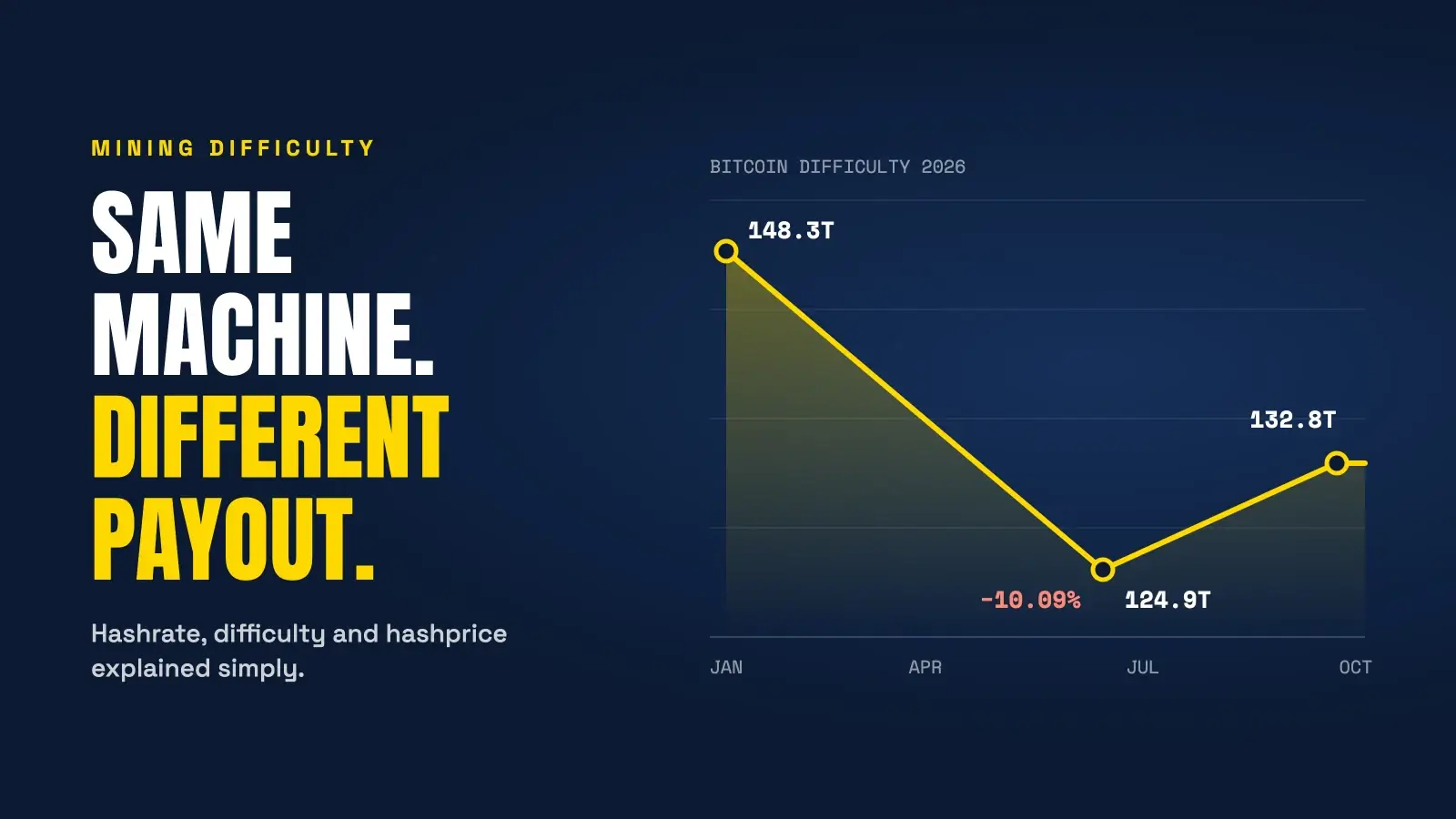
This isn't bad luck; it's how difficulty works. As newer, more efficient hardware joins the network, difficulty rises and every machine earns less per terahash. The least efficient machines cross below break-even first and switch off — which is precisely why so many of them appear on the second-hand market. As our explainer on mining difficulty shows, efficiency is your only defence against that squeeze, and a used machine has already lost part of that defence by being a generation behind.
So the useful rule is: the closer a used machine is to the current generation, the better the deal. A one-year-old S21 at 30% off can be excellent value. A five-year-old S19 at 80% off usually isn't.
The real cost of a used miner
When a used machine does pass the free miner test, the discount is genuine — but it isn't the whole bill. Add these to the asking price before comparing:
- No warranty. Used hardware is almost always sold as-is, and manufacturer warranties generally don't transfer. Every repair is yours.
- Hashboard repairs. A single failed hashboard typically costs $200–500 or more to repair, and a replacement board can cost as much as the entire used miner.
- Degradation. A board benchmarking at 95% of spec today can drop to around 80% within months, cutting revenue without any obvious failure.
- Maintenance reserve. Budget roughly 10–15% of the purchase price per year for fans, PSUs and boards.
- Shipping risk. These machines weigh 15 kg or more and contain delicate boards; returning a faulty one internationally is slow and expensive.
Refurbished units sit in between: typically 10–25% below new, bench-tested, and backed by a seller warranty of 30–90 days. That's meaningfully better than as-is, though still far short of a manufacturer warranty.
How to check a used ASIC miner before you pay
- Ask for the dashboard. Request a screenshot of the miner's web interface showing every hashboard detected with its individual hashrate. Missing or underperforming boards are the most common fault.
- Ask for a live video. A working machine takes five minutes to demonstrate running. Refusal is an answer in itself.
- Verify on a pool. Ideally see several days of pool statistics, not just a momentary reading — sustained hashrate is what you're buying.
- Check serial numbers. Fan labels, hashboard serials and batch codes should be consistent. Mismatched parts suggest a unit rebuilt from several machines.
- Reflash the firmware. Modified firmware can misreport hashrate or redirect earnings. Install the manufacturer's official firmware immediately on delivery.
- Check the seller as carefully as the machine. The used market is where fake listings thrive — our scam checklist covers the red flags, and the payment rule still applies: never prepay in crypto to someone you can't verify.
When a used miner is the smarter buy
Honesty cuts both ways, so here are the situations where second-hand genuinely wins:
- You have exceptionally cheap power — own hydro, surplus solar, or an industrial contract below roughly €0.05/kWh. At those rates even older machines pass the free miner test, and the low purchase price shortens payback dramatically.
- You can repair hardware yourself. If replacing a fan or reworking a board is within your skills, the missing warranty matters far less.
- The machine is nearly current-generation and the discount is substantial — a recent model sold early by an operator who needed cash.
- You're buying at the bottom of a cycle. Machine prices track mining profits, as our Antminer L9 review shows with a price fall from around 16 300€ to 2 950€. Low prices hit new and used machines alike — so check whether the new equivalent is now nearly as cheap.
When new is worth the premium
- You pay a European household or standard hosting rate, where only efficient machines pass the free miner test.
- You can't repair hardware and want a warranty to fall back on.
- You're buying your first miner and don't yet know what a healthy one looks like.
- You want a predictable resale value later — current-generation machines hold value far better.
New vs used at a glance
| New | Refurbished | Used (as-is) | |
|---|---|---|---|
| Price vs original retail | Full | 10–25% lower | 30–70% lower |
| Warranty | Manufacturer | Seller, 30–90 days | Usually none |
| Efficiency | Current generation | Often older | Often older |
| Hidden faults | Rare | Tested | Your risk |
| Best for | Normal EU power prices | Middle ground | Very cheap power + repair skills |
FAQ: buying a used ASIC miner
Is it worth buying a used ASIC miner?
How much cheaper are used ASIC miners?
What should I check before buying a used miner?
Do used ASIC miners come with a warranty?
How long does a used ASIC miner last?
Is a used Antminer S19 still profitable?
Not sure if that second-hand deal is real? Ask us first
We've sold miners across Europe since 2015 and we'll run the free miner test on any machine you're considering — even one you're buying elsewhere. If you choose new, our machines come with up to 2-year warranty on Bitmain models, free setup and payment on delivery. Check the numbers in our profitability guide, run a machine at industrial rates in our hosting datacentre, or browse current miners.
Disclaimer: We are not financial advisors. Break-even figures are calculated for early-September 2026 network conditions and change daily with coin prices and difficulty. Used hardware condition varies widely; always inspect and verify before paying, and never invest money you cannot afford to lose.
Written by Denis
Best offers
Join Risk Free
30 days refund
100% Safe
Secure Shopping
24x7 Support
Online 24 hours
Best Offers
Grab Now
Free Shipping
On all order over
Know Us
- Top SK-CZ vendor since 2015, now expanding across EU
- Buy directly from our EU wholesalers
- 29 wholesalers = always lowest ASIC prices
- Up to 2-year warranty on Bitmain miners
- Personal support: miner choice, profit calculation
- Free miner setup